Draxon VR Training Syllabus
Departing from the Aircraft
 Virtual Reality
Description
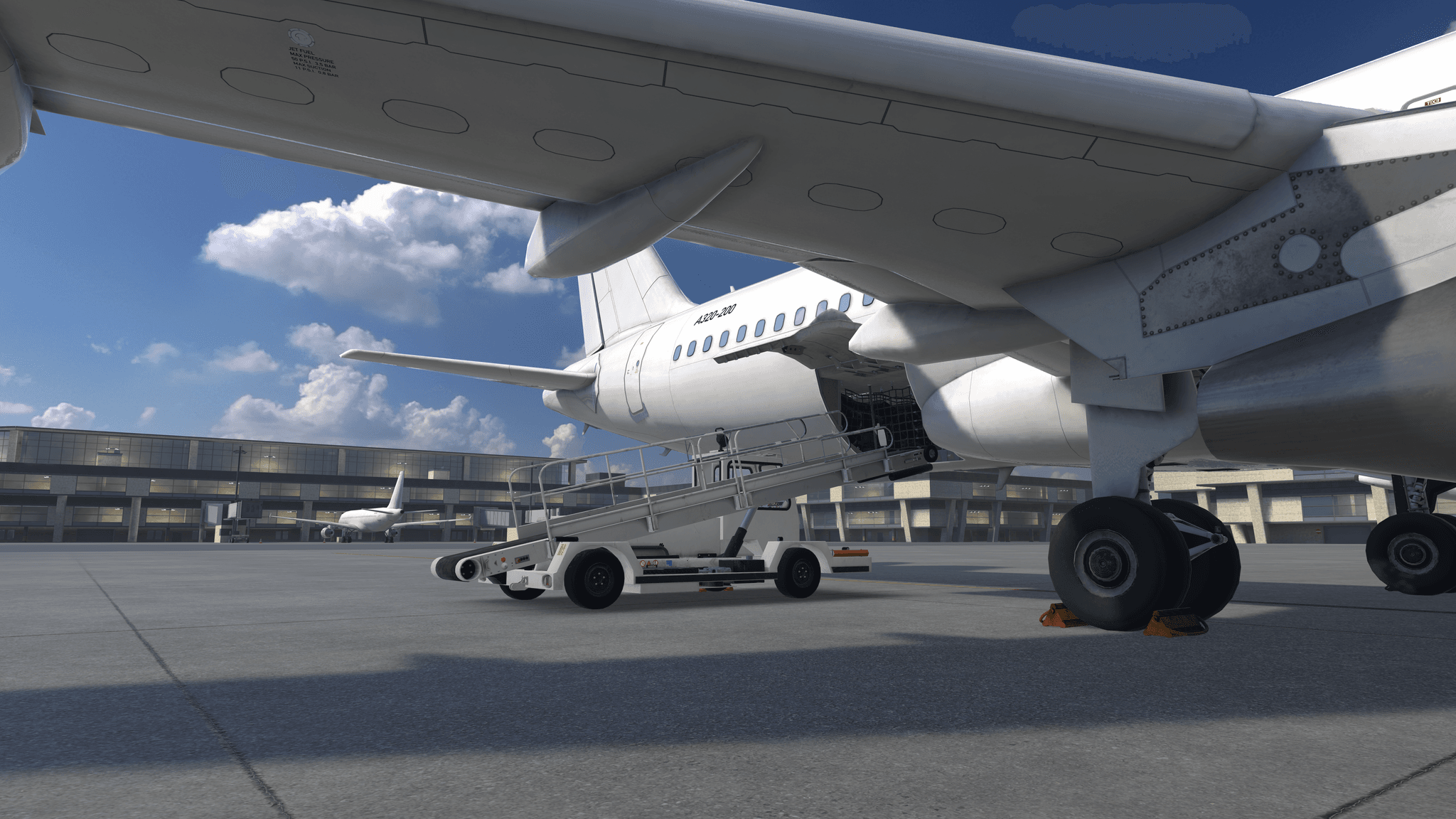
Prepares trainees to safely depart a belt loader from the aircraft after the unloading/loading processes have been completed. Focuses on obstacle checks, removal of chocks, vehicle readiness and safe driving away from the ERA, incl reverse and forward driving. Trains spatial awareness and deliberate decision-making during equipment repositioning on the apron.
Lesson Overview
- 1Visually confirm a clear apron and driving path around and behind the belt loader
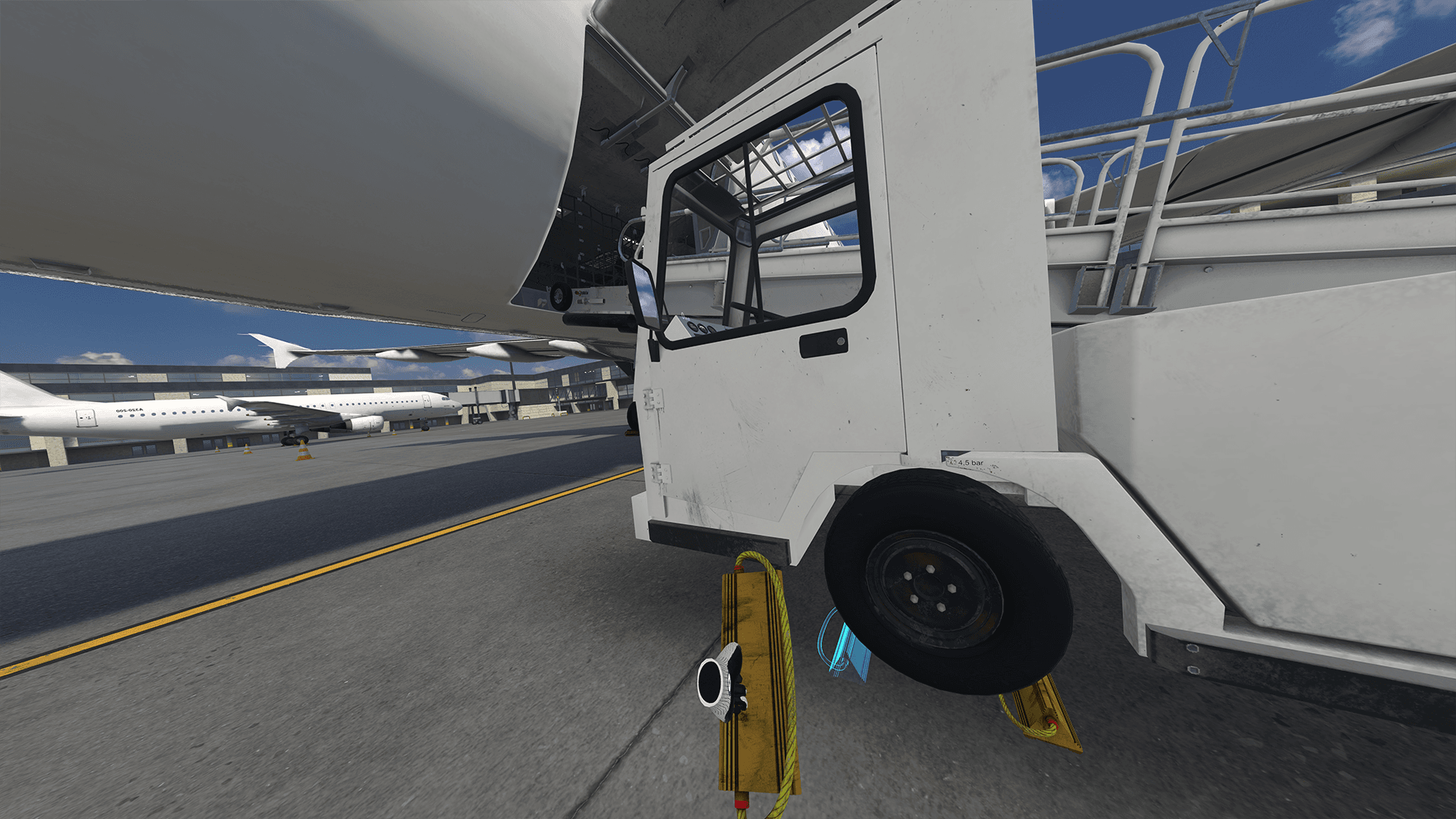
- 2Remove chocks and address FOD before entering the cabin
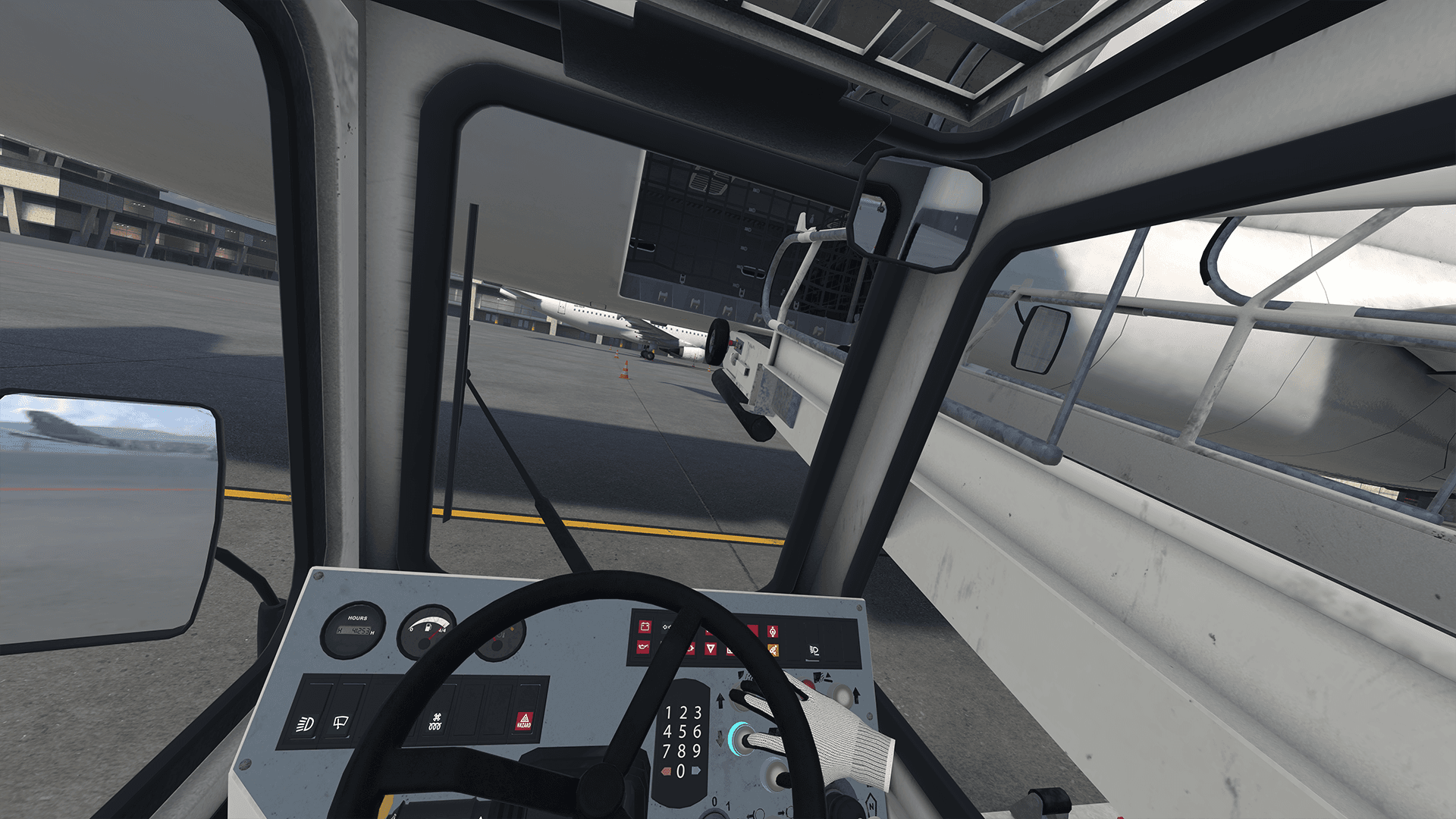
- 3Check engine status, gear position, and parking brake prior to movement
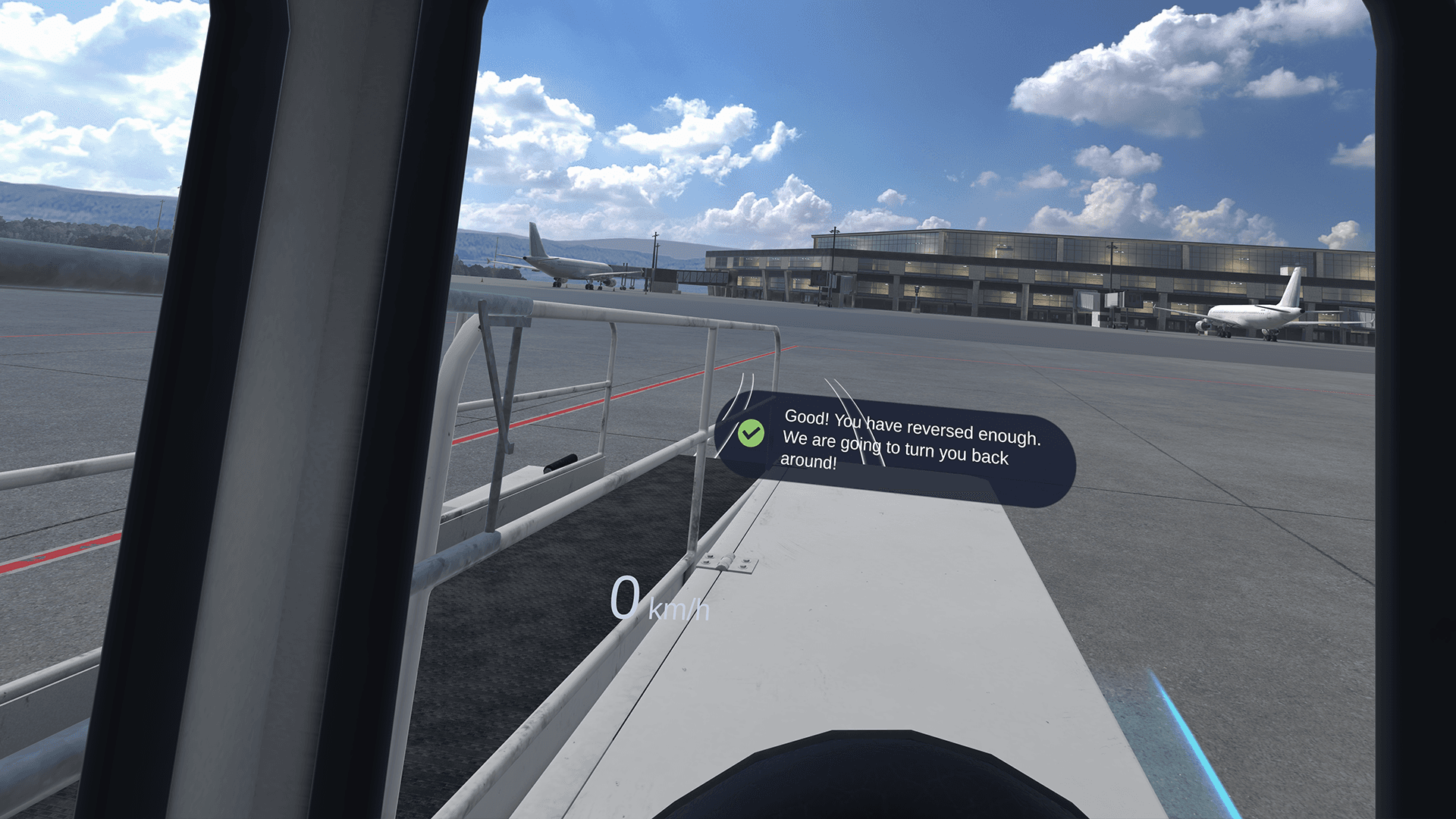
- 4Reverse a short distance and lower the conveyor belt fully to its resting position
- 5Follow the correct exit route from the ERA while maintaining clear awareness of the aircraft, personnel, and surrounding GSE.
Skills Acquired
- Perform a complete visual inspection of the surroundings
- Verify engine status, neutral gear, and parking brake settings before driving
- Reverse and reposition the belt loader in a controlled, short movement
- Depart and reverse safely via the correct route while maintaining clearance to aircraft structures and surroundings
Lesson Procedure
- The trainee starts on the apron and is informed that the loading procedure is complete.
- The trainee must visually scan the apron in all directions to confirm that the area around and behind the belt loader is clear of people and GSE. Next they must pick up any FOD in the area.
- Then, the trainee must pick up the chocks, and store them securely in the chock compartment, before he can start the departure process.
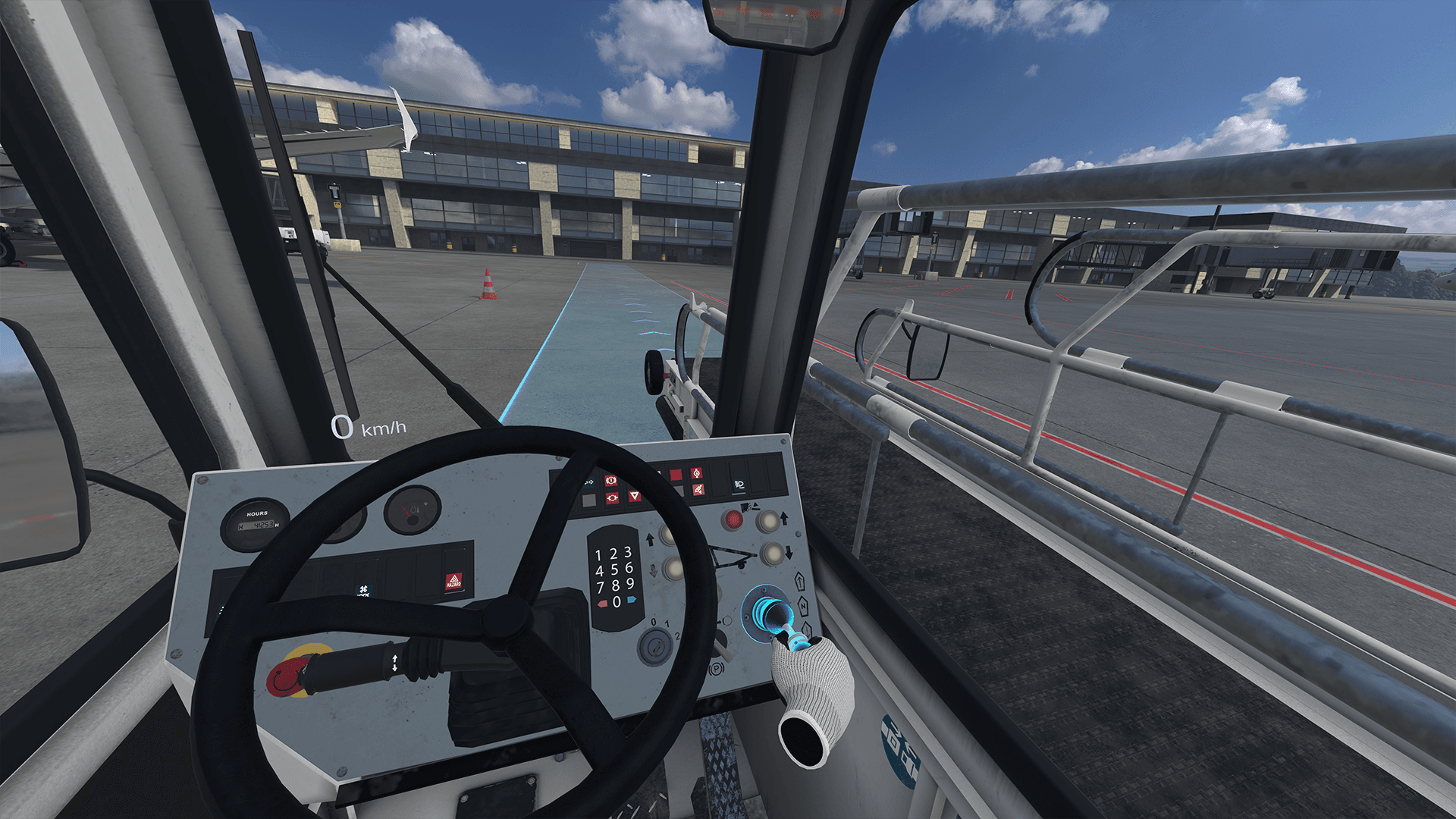
- In the cabin, the trainee confirms that the engine is running, the gear is in neutral, and the parking brake is set. They then re-check the path and back up slightly from the aircraft from the aircraft.
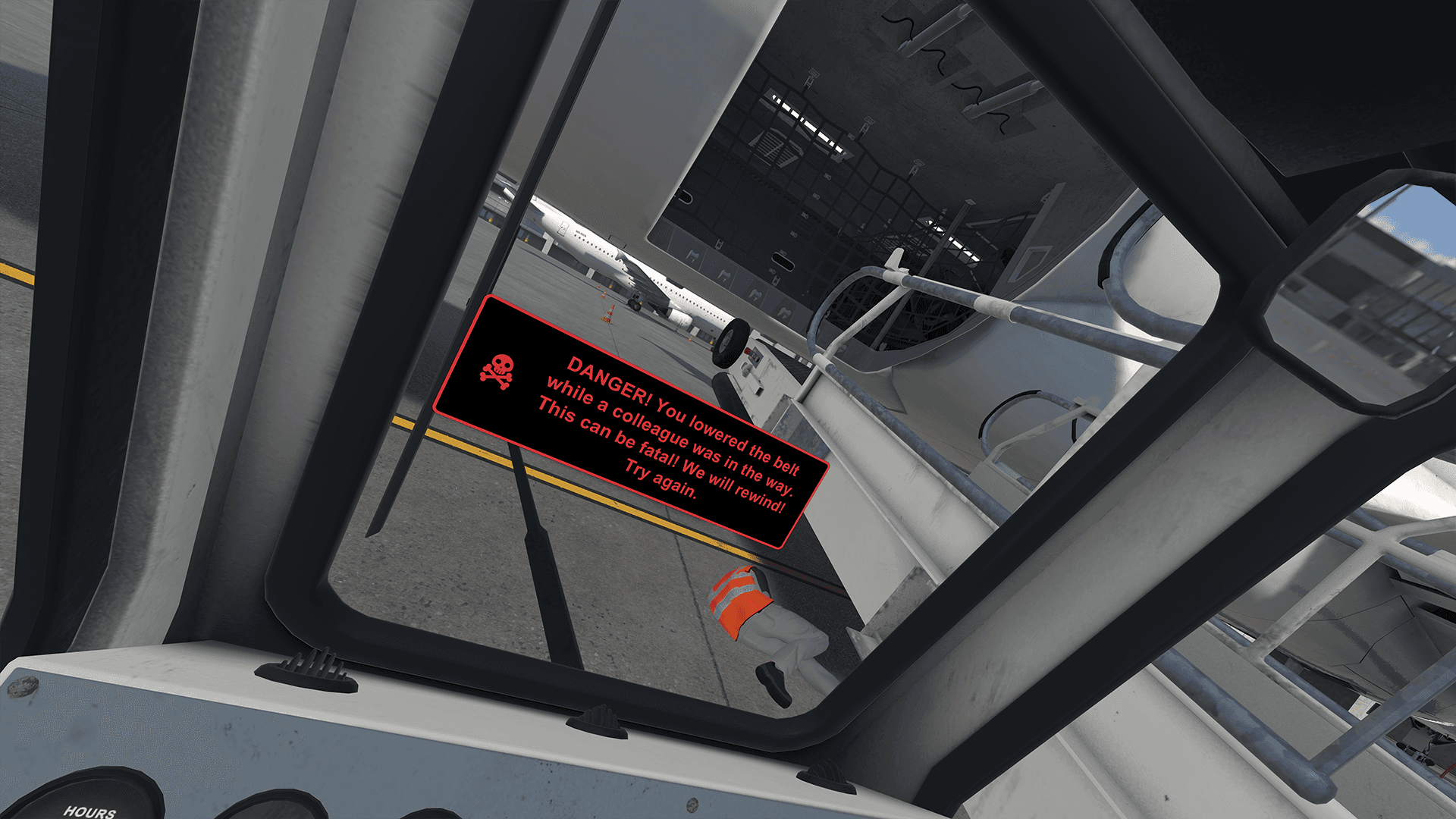
- At the new position, the trainee lowers the conveyor belt to its lowest position, when the area is clear. Attempts to lower the belt with a colleague nearby, trigger safety interventions.
- The trainee selects and follows the correct departure path from the ERA: avoiding driving straight forward with an excessively tight turn and avoiding reversing under the wing.
- The lesson ends once the trainee has exited the ERA on the prescribed route, completing all departure steps successfully.
Safety Scenarios & Learnings
Driving forwads near the aircraft
Simulates an aircraft collision to reinforce disciplined gear checks before movement.
Simulates an aircraft collision to reinforce disciplined gear checks before movement.
Colleague walking under the belt during lowering
Reinforces risk awareness and that lowering must stop immediately when personnel are in the danger zone.
Reinforces risk awareness and that lowering must stop immediately when personnel are in the danger zone.
Raising the belt into the aircraft door
Demonstrates high-impact hazards from incorrect vertical adjustments.
Demonstrates high-impact hazards from incorrect vertical adjustments.
Driving under the wing
Highlights the risk of improper routing and highlights prohibited paths.
Highlights the risk of improper routing and highlights prohibited paths.
Pushing over the wingtip cone
Emphasizes spatial awareness and respect for cone-protected zones.
Emphasizes spatial awareness and respect for cone-protected zones.
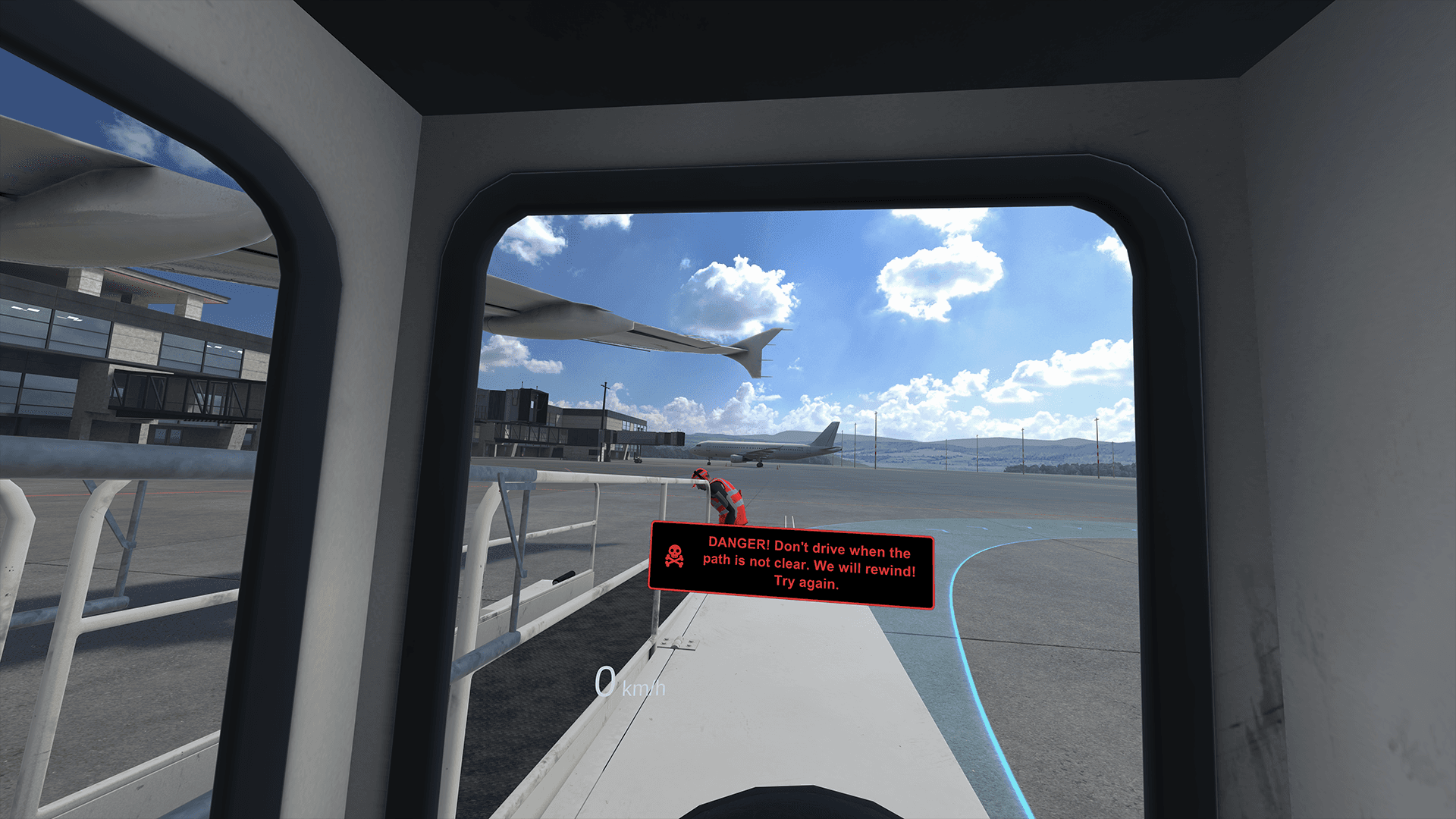
Starting to drive while personnel walk across the path
Reinforces that movement must only begin once all persons have cleared the area.
Reinforces that movement must only begin once all persons have cleared the area.
Gallery