Draxon VR Training Syllabus
Driving Training
 Virtual Reality
Description
This introductory lesson familiarizes trainees with basic driving in Virtual Reality. It allows new operators to get a feel for the controls and handling of the belt loader in a safe, open environment before progressing to realistic apron operations.
Lesson Overview
- 1Introduction to driving and control mechanics
- 2Perform start-up checks and learn correct engine activation
- 3Practice smooth acceleration, braking, and steering
- 4Conduct braking drills and controlled path driving
- 5Finish with reverse driving, parking and shutdown
Skills Acquired
- Correct start and shut down procedures of the belt loader engine
- Accurate driving in VR, including reverse driving and steering
- Perform normal and emergency braking safely
Lesson Procedure
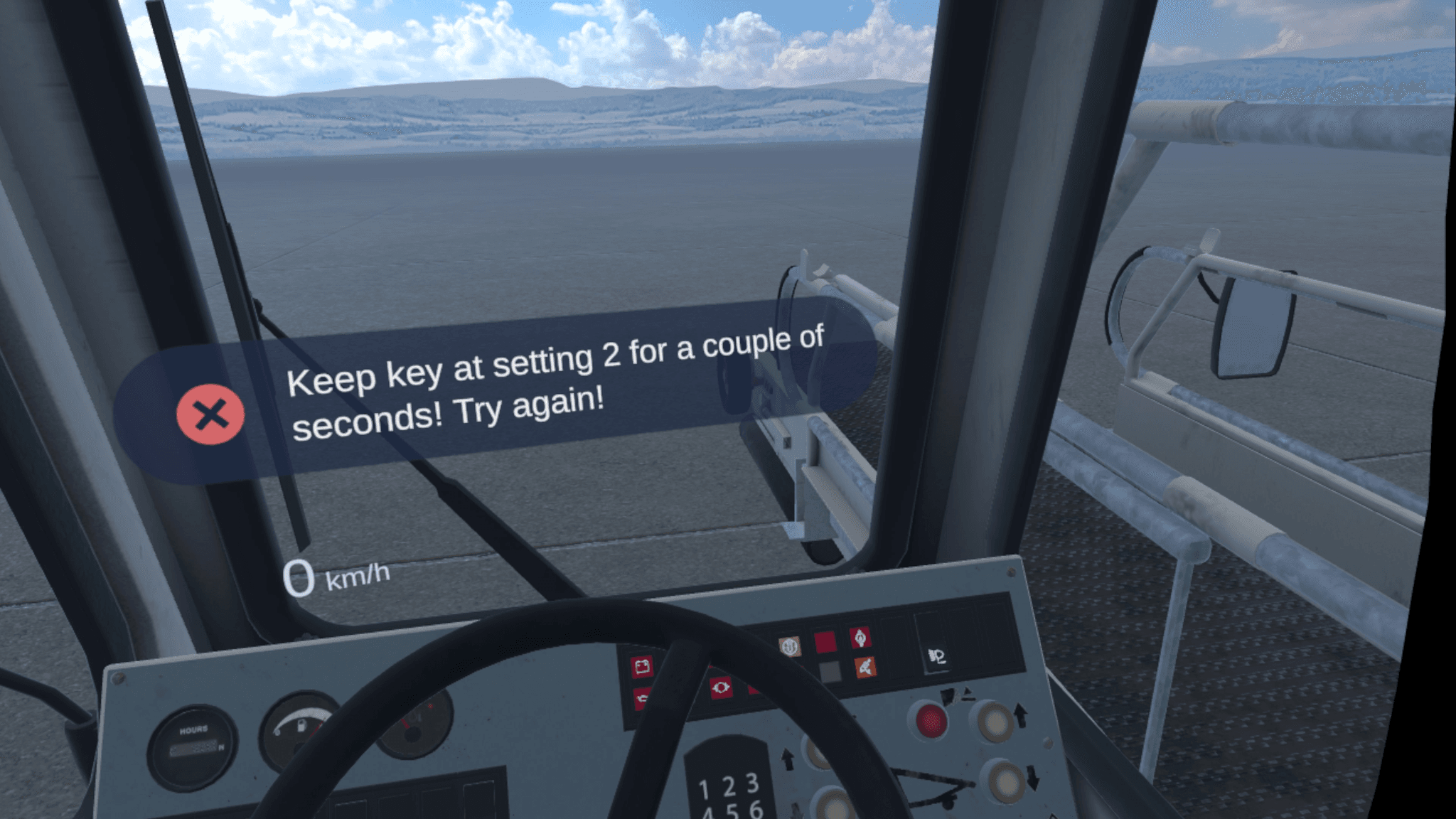
- The trainee begins inside the cabin, ensuring the gear is in neutral and the parking brake is set. The engine is started using the correct two-step process (power on → start engine).
- Once running, the parking brake is released, and the trainee shifts into forward drive to practice smooth acceleration,
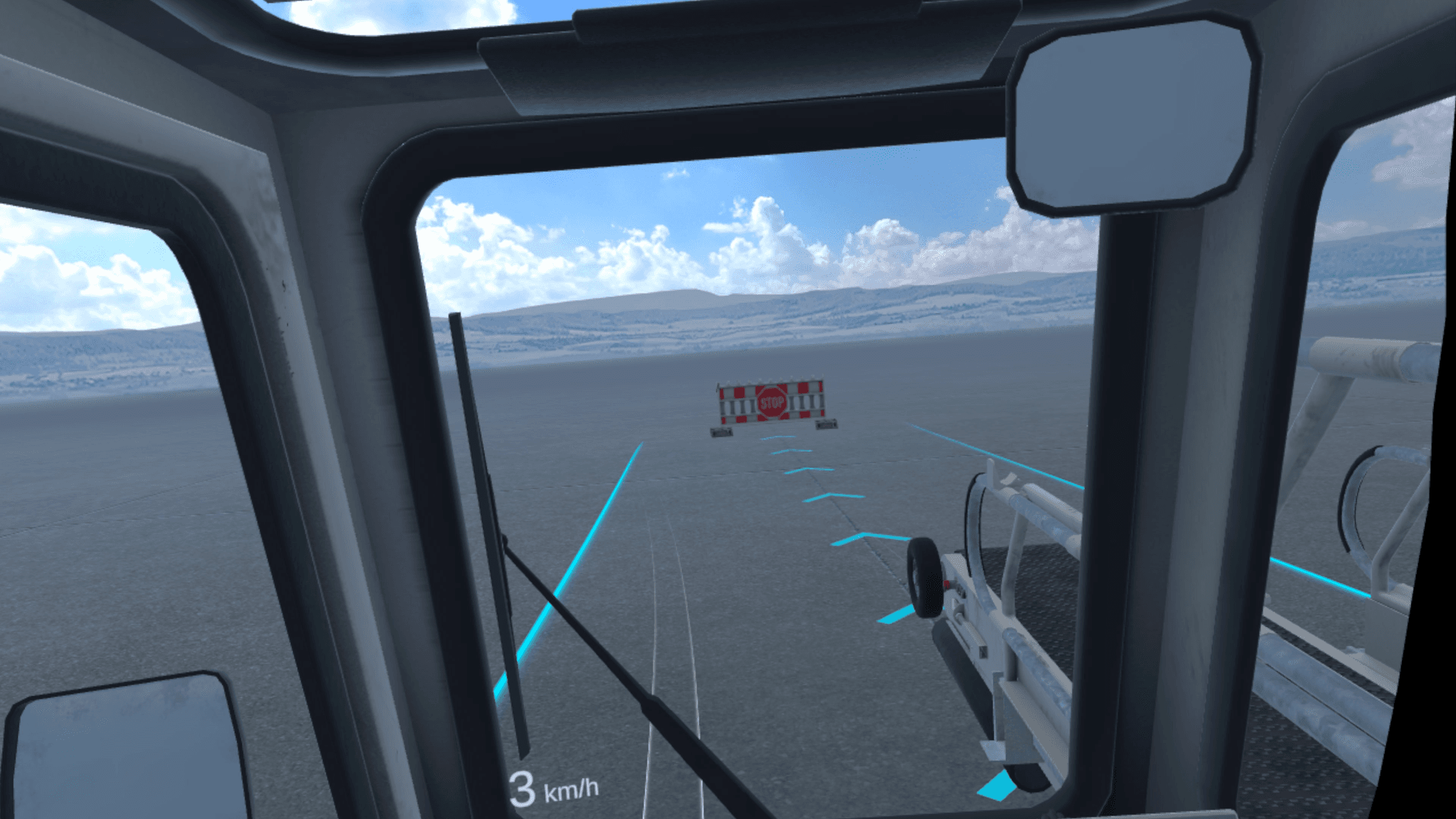
- Braking drills follow: the trainee approaches visual roadblocks and stops before impact, training timely emergency braking.
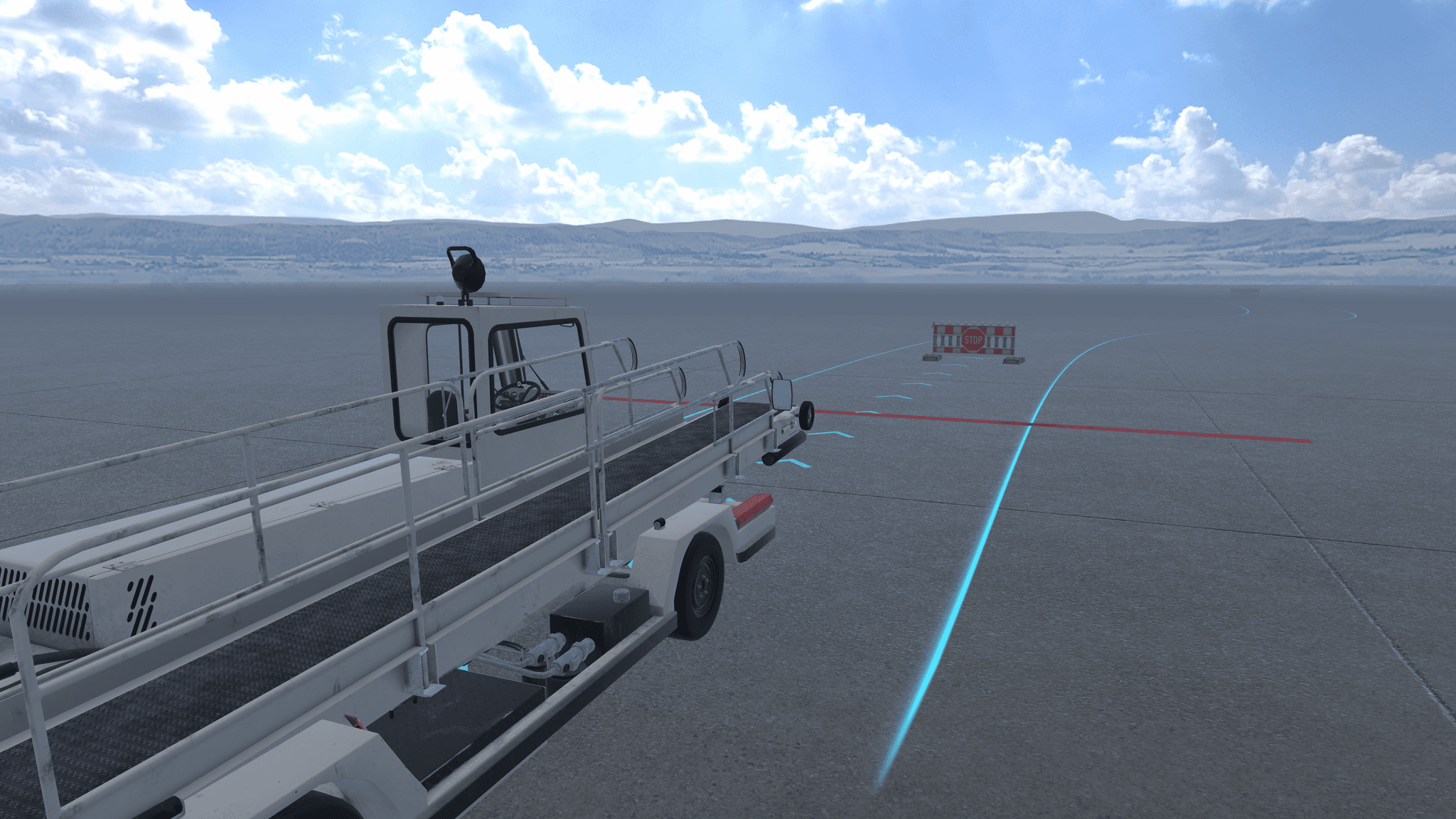
- Mandatory brake tests are performed before crossing lines to simulate ERA entry and reinforce ramp safety.
- The trainee drives along a marked path, maintaining lane discipline and avoiding obstacles; veering off triggers corrective feedback.
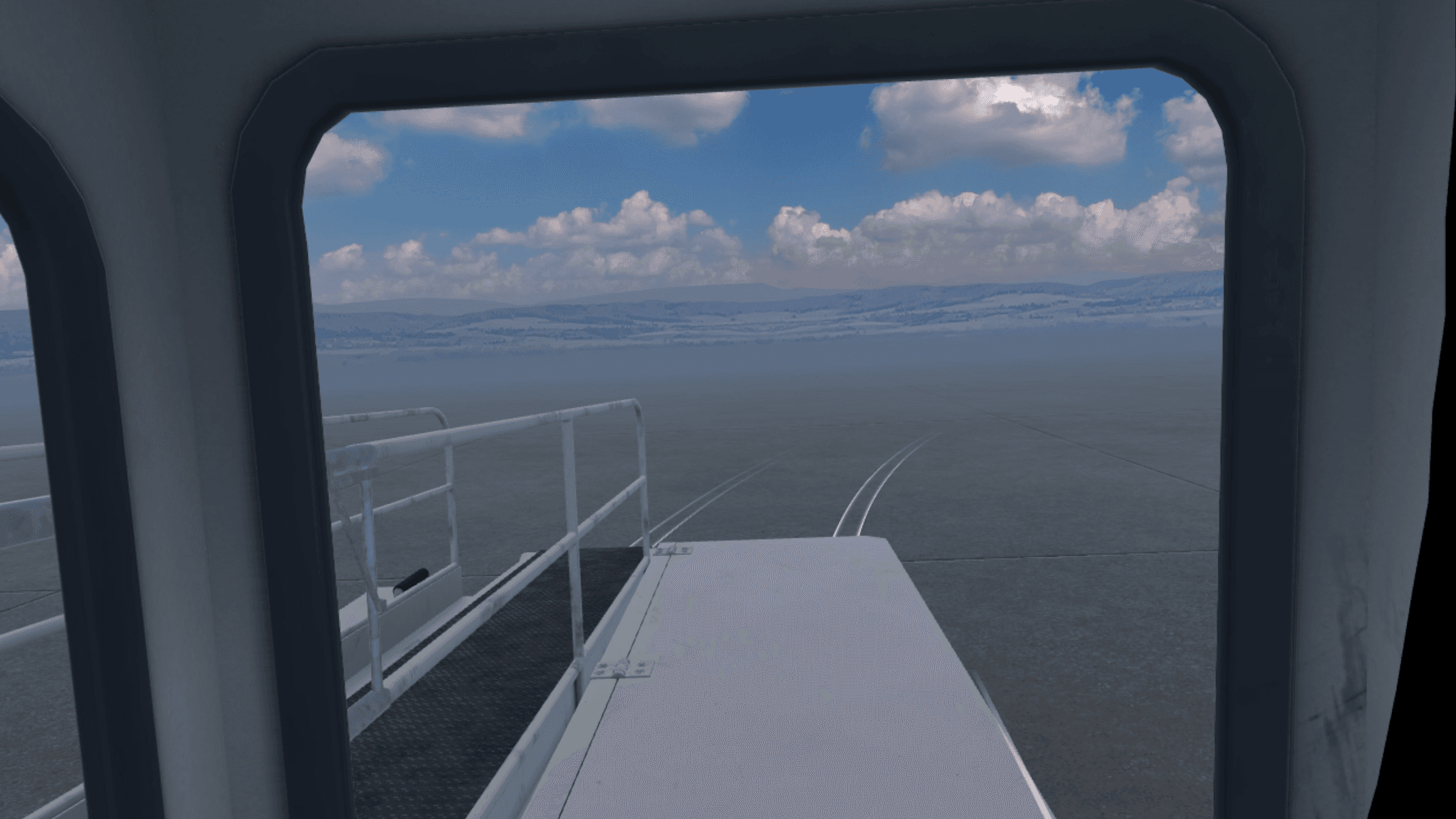
- Reverse driving is then introduced, practicing slow, controlled maneuvers.
- The session concludes with a full stop, shifting to neutral, setting the parking brake, and turning off the ignition.
Safety Scenarios & Learnings
Incorrect engine start sequence
Teaches proper two-step ignition and prevents premature or prolonged key turning.
Teaches proper two-step ignition and prevents premature or prolonged key turning.
Parking brake not set
Builds habits for safe startup by confirming neutral gear and brake engagement.
Builds habits for safe startup by confirming neutral gear and brake engagement.
Veering off the designated path
Improves steering accuracy and focus by demonstrating the effects of distraction.
Improves steering accuracy and focus by demonstrating the effects of distraction.
Crashing into stop markers or boundaries
Strengthens situational awareness and precision in controlled stopping.
Strengthens situational awareness and precision in controlled stopping.
Brake test missing
Shows risk of entering high-demand sections without confirmed braking performance, reinforcing the need to check brakes before entering.
Shows risk of entering high-demand sections without confirmed braking performance, reinforcing the need to check brakes before entering.
Late braking before an obstacle
Elevates impact risk, reinforcing timely braking and obstacle anticipation.
Elevates impact risk, reinforcing timely braking and obstacle anticipation.
Gallery