Draxon VR Training Syllabus
Operating at the Aircraft
 Virtual Reality
Description
Prepares trainees to safely operate the belt loader while positioned at the aircraft during a live turnaround scenario. The lesson reinforces how to start, control, and stop the conveyor belt during unloading, focusing on precision, timing, and awareness in an active apron environment.
Lesson Overview
- 1Observe colleague entering the cargo hold using the belt loader
- 2Move to the control panel to begin operating the equipment
- 3Start and adjust the conveyor belt for safe unloading
- 4Stop operations when conditions require it or instructions are given
- 5Apply timing, coordination, and safety awareness throughout
Skills Acquired
- Start and control belt loader conveyor operations safely
- Adjust conveyor speed for single-person or team operations
- Recognize and respond appropriately to operational instructions
- Maintain situational awareness on the live apron
- Respond correctly to operational hazards and misinputs
Lesson Procedure
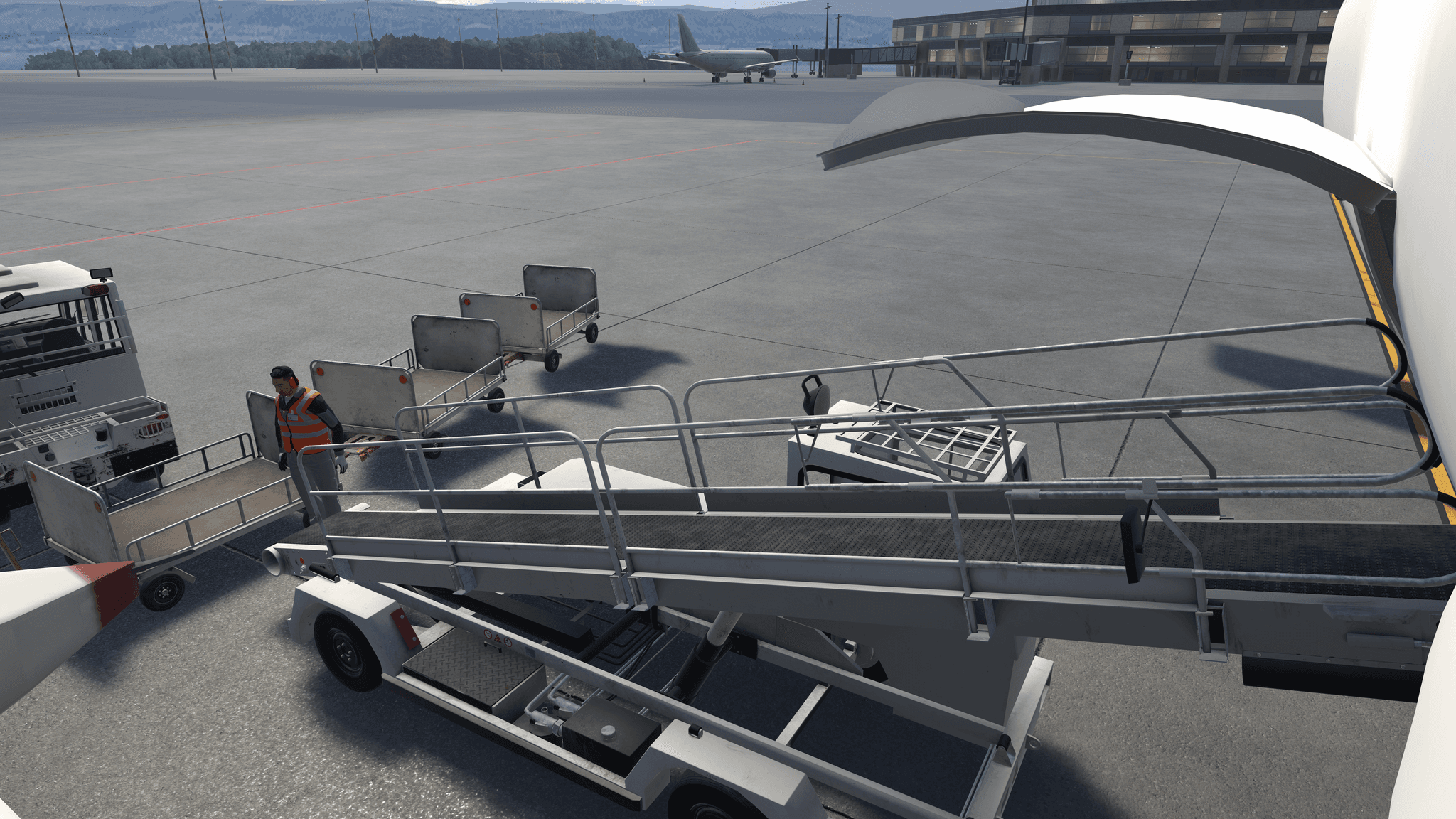
- The trainee begins standing on the apron beside the belt loader. The environment is active, with baggage carts and a tractor nearby, simulating real turnaround conditions.
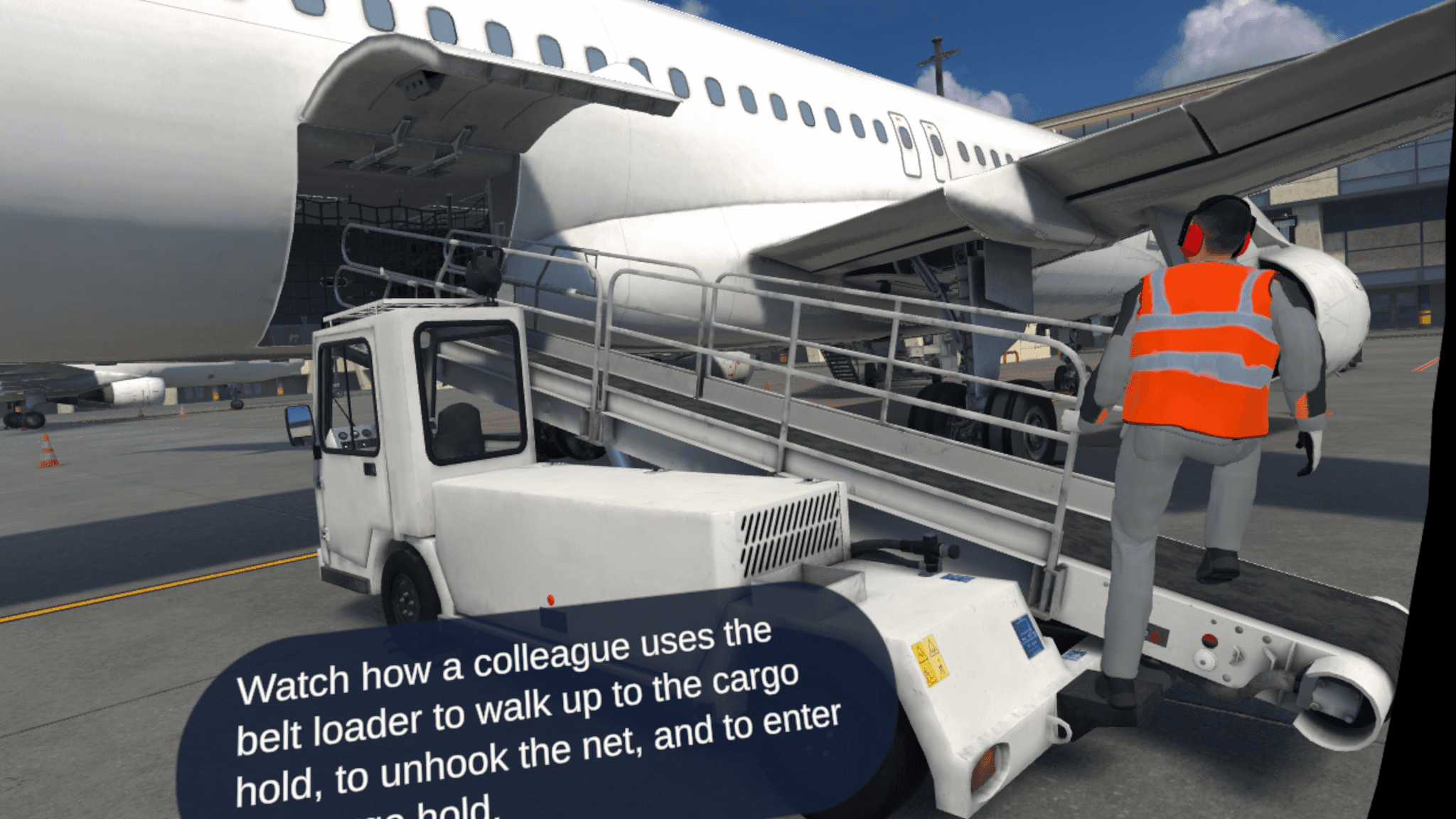
- The lesson starts with an observation sequence: a colleague approaches, steps carefully onto the belt loader, unhooks the cargo hold net, and climbs inside the hold to begin preparation. The trainee watches, learning how coordination and timing unfold during live operations.
- The trainee moves to the rear-left control panel of the belt loader to begin hands-on operation.
- First it is required to start the conveyor belt for unloading. The trainee must press the correct button within three seconds; incorrect or delayed actions trigger a rewind with safety feedback.
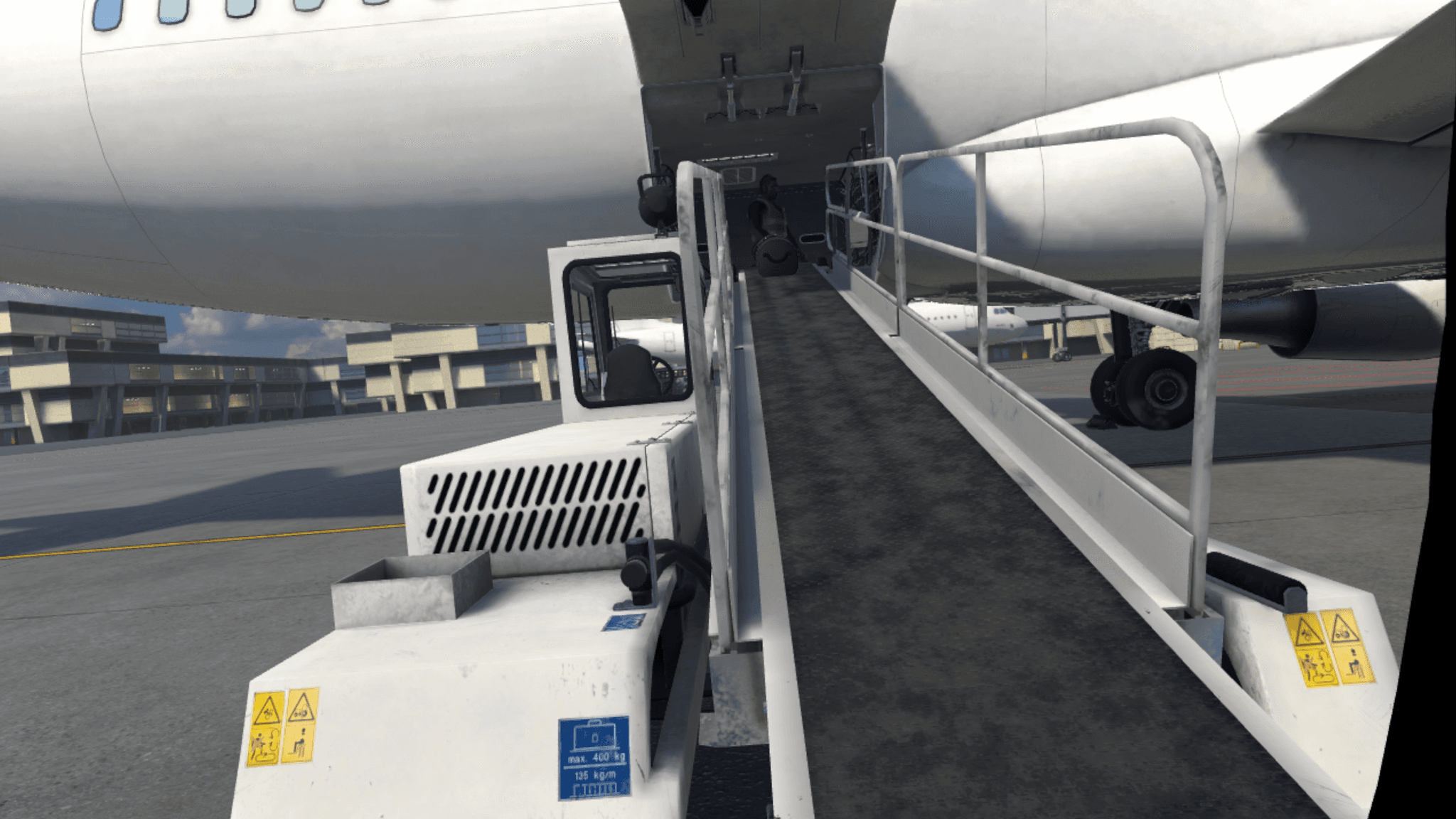
- Once running, the belt operates too fast for a single operator, prompting the trainee to reduce its speed to a safe, controlled level. Taking too long or touching the moving belt results in a rewind and corrective instruction.
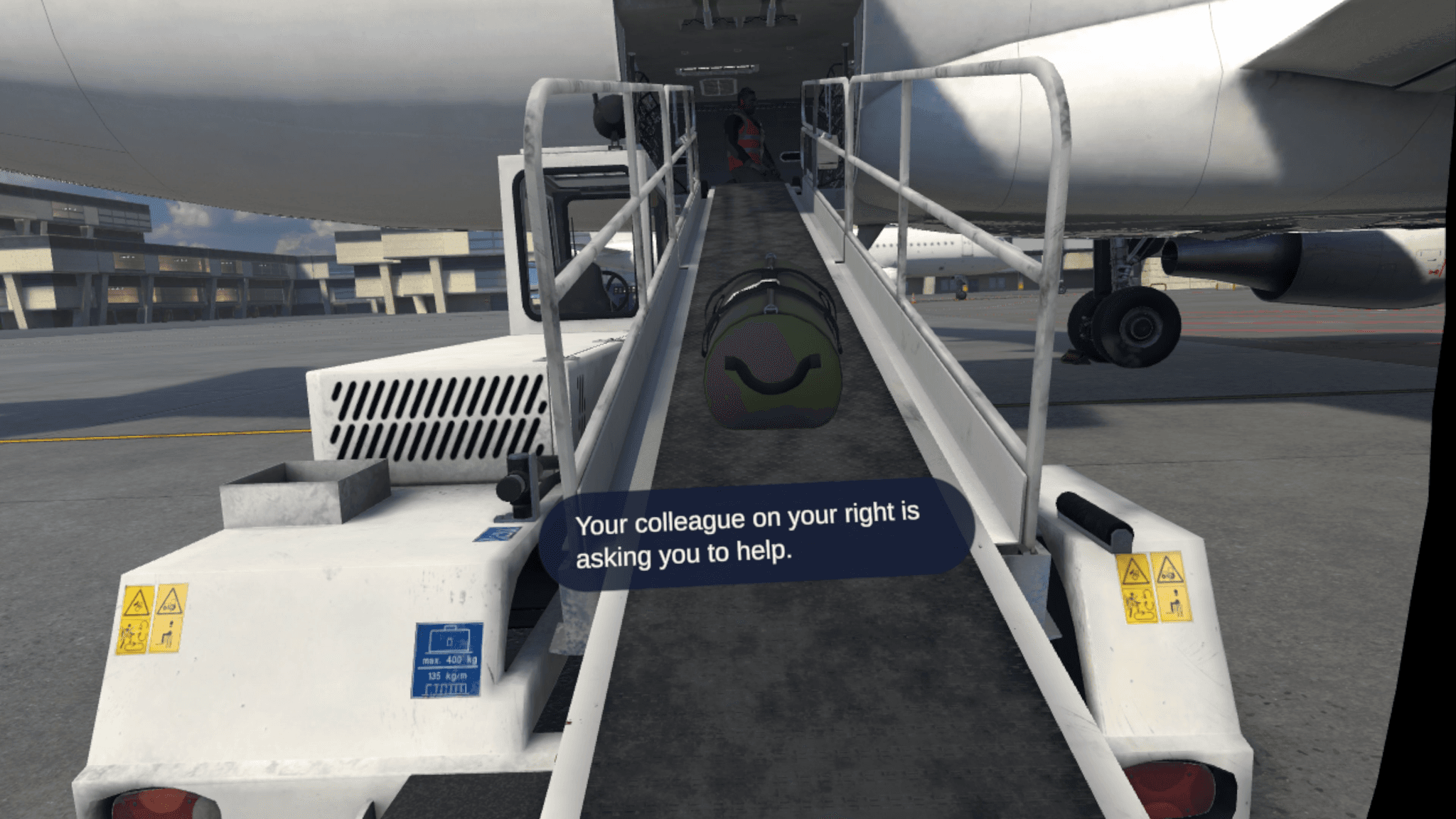
- As the belt continues to run, the colleague in the cargo hold begins unloading baggage. A second colleague calls from the side, requesting immediate help. The trainee must stop the conveyor belt before stepping away; failing to do so causes a rewind and highlights the risk of unattended equipment.
- The scenario concludes successfully when the trainee stops the belt correctly and prepares to assist the colleague. The lesson ends with a summary confirming that all operational and safety objectives have been met.
Safety Scenarios & Learnings
Too slow to start belt movement
Reinforces timely decision-making during active turnaround to prevent workflow disruption.
Reinforces timely decision-making during active turnaround to prevent workflow disruption.
Pressing the wrong button
Emphasizes control panel familiarity and precise motor control under pressure.
Emphasizes control panel familiarity and precise motor control under pressure.
Hand on moving belt
Simulates risk of serious injury, highlighting the importance of safety distances and safe posture.
Simulates risk of serious injury, highlighting the importance of safety distances and safe posture.
Incorrect speed setting
Demonstrates the operational need to adapt speed to manpower and situational context.
Demonstrates the operational need to adapt speed to manpower and situational context.
Failure to stop the conveyor belt before leaving
Recreates realistic apron hazards, teaching the importance of halting machinery before distraction or movement away from equipment.
Recreates realistic apron hazards, teaching the importance of halting machinery before distraction or movement away from equipment.
Gallery