Draxon VR Training Syllabus
Positioning at the Cargo Hold
 Virtual Reality
Description
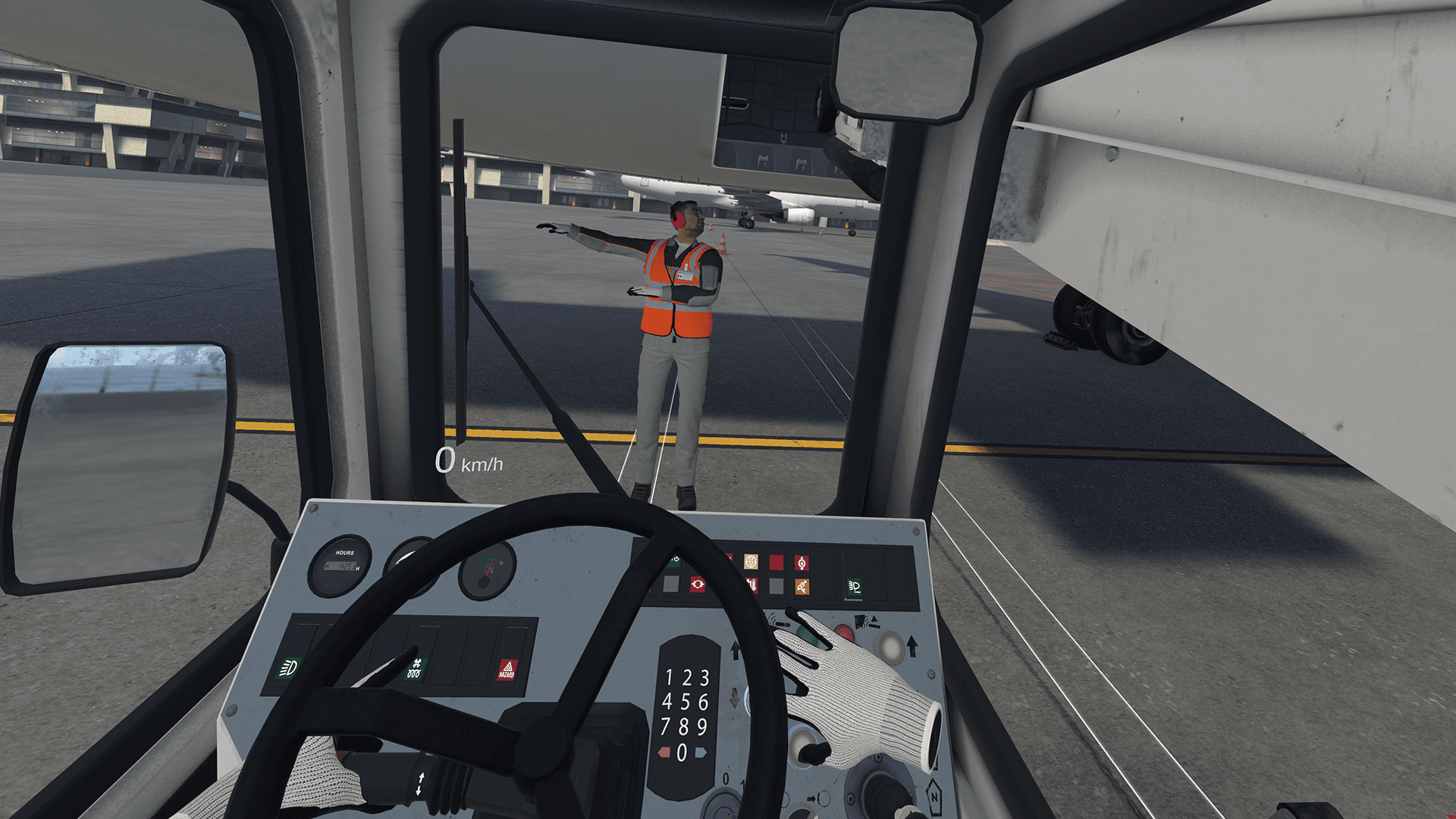
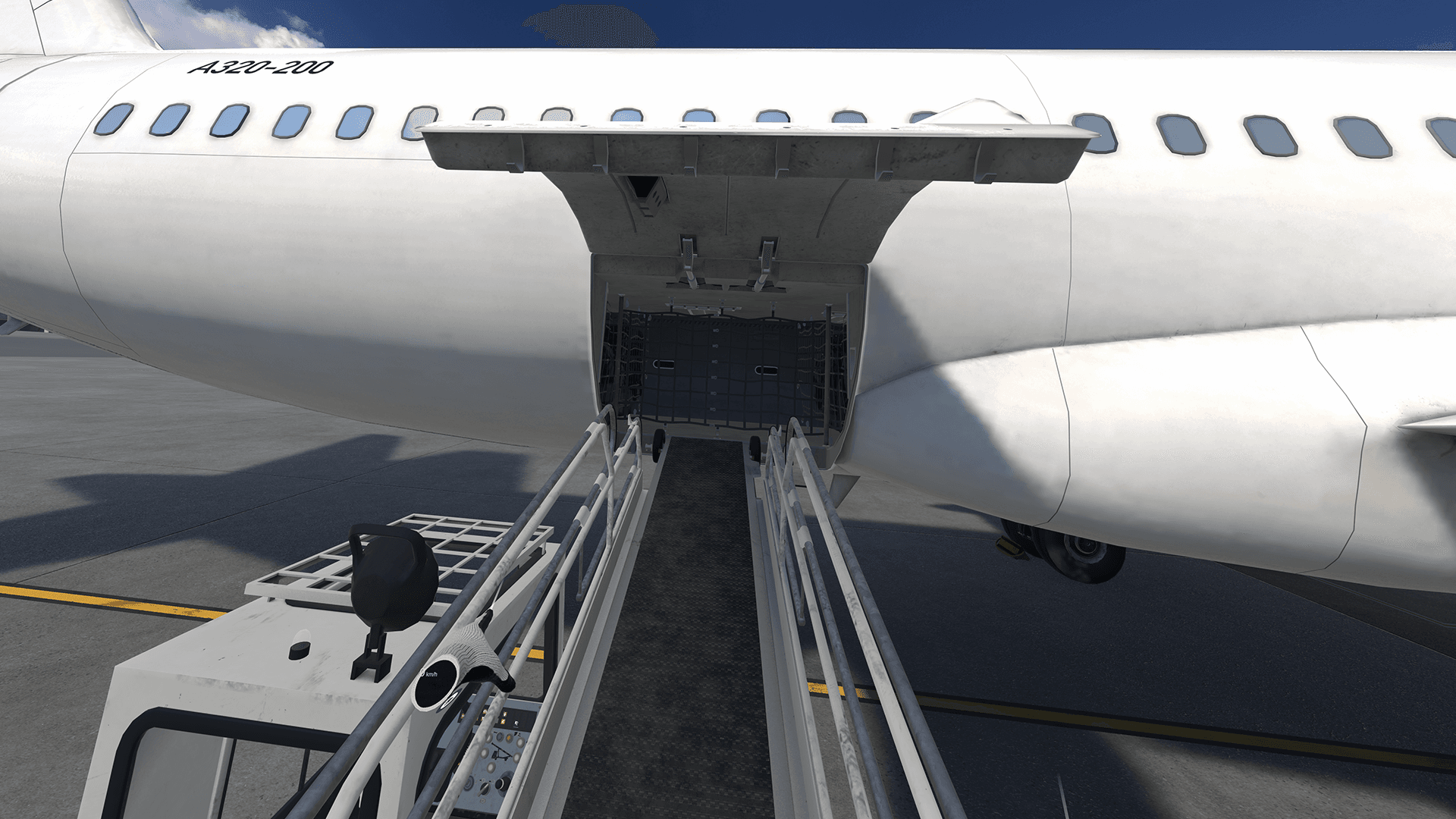
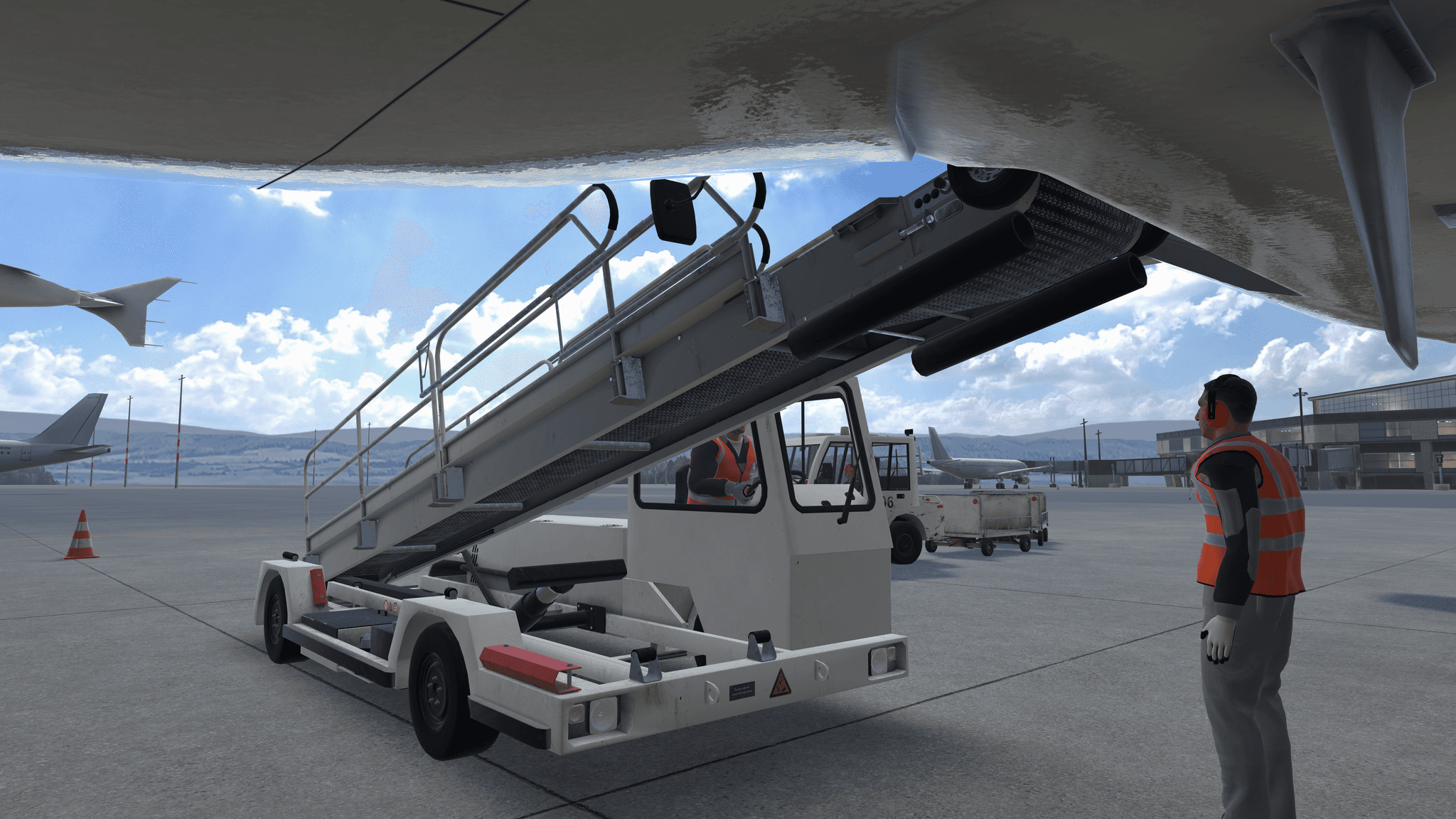
Trains the final, contact-free alignment of the belt loader at the cargo hold under guide person signals. Focuses on sequencing (Lift → Drive → Align → Fine-tune → Drive-in), precise height & distance control, and disciplined hand-signal compliance.
Lesson Overview
- 1Initial lift to approach height under UP/STOP signals from a guide person
- 2Short drive forward on FORWARD/STOP signals from a guide person
- 3Lift to align, then fine-tune height with UP/DOWN corrections
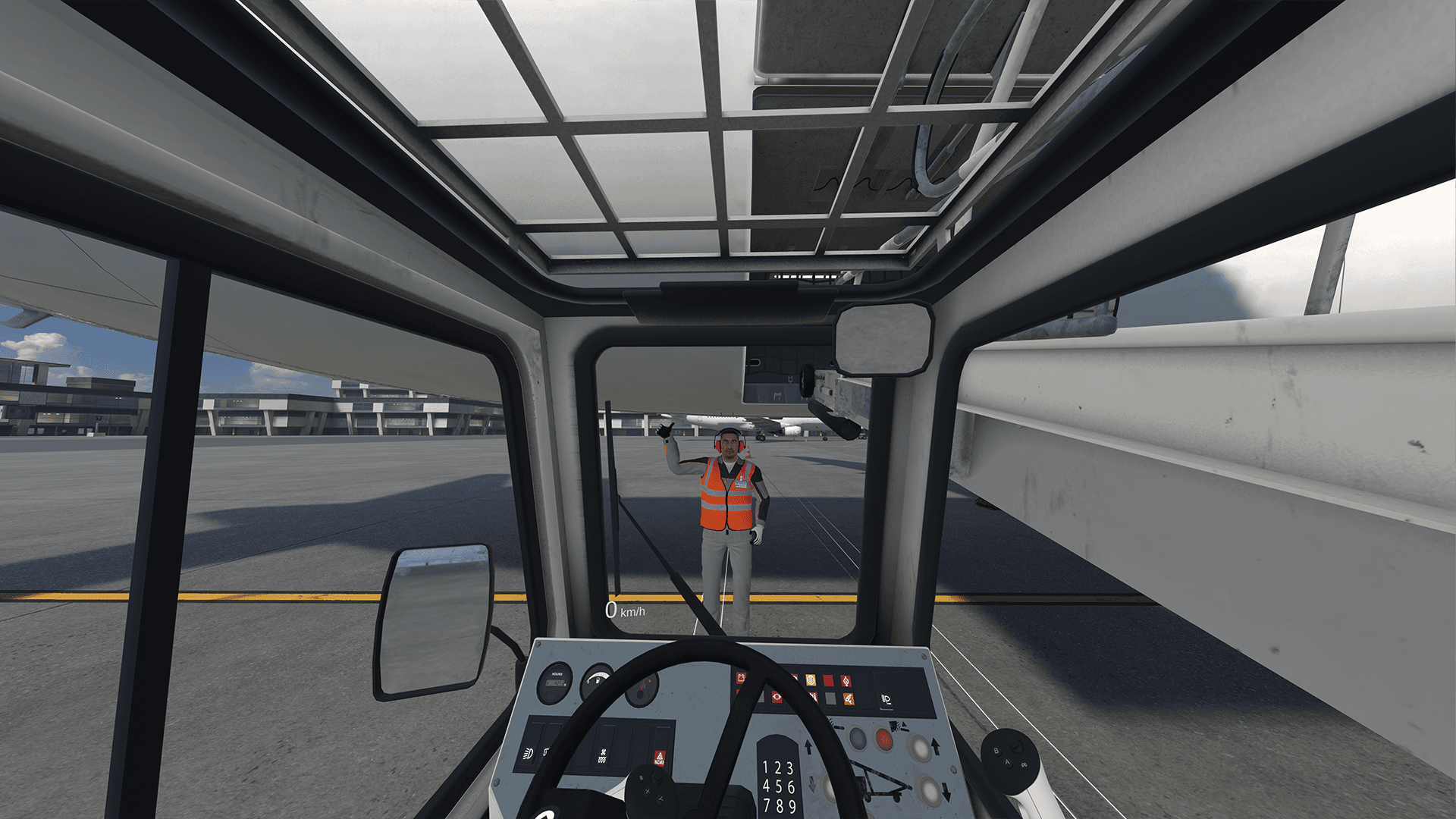
- 4Final drive-in using DISTANCE/STOP instructions from a guide person to achieve a few-cm gap
- 5Secure, exit, and chock the vehicle and then deploy the guardrails
Skills Acquired
- Follow guide person hand signals with exact timing
- Execute accurate belt-loader positioning and smooth, coordinated movements
- Adjust conveyor height and angle via the boom’s front (aircraft) side and rear-end controls, ensuring safe clearance.
- Secure, park, and chock the belt loader correctly before leaving the cab
- Extend and lock guardrails safely to prepare the loader for operation
Lesson Procedure
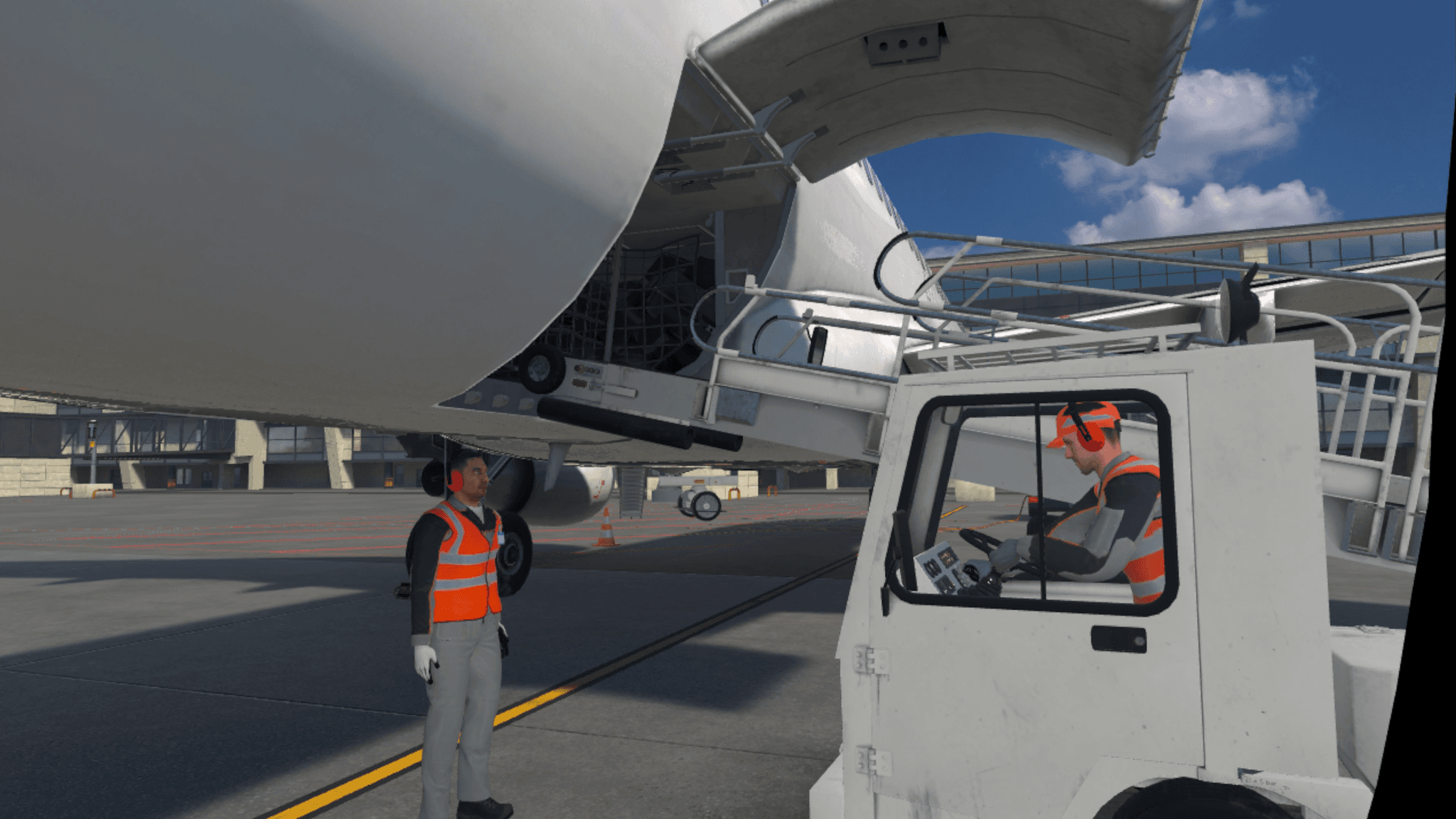
- The trainee begins seated in the belt loader with the engine running, positioned a short distance from the aircraft’s cargo hold. The vehicle is aligned with the hold and parked near the finial position.
- Initial Lift
- After receiving the guide person’s UP signal, the trainee raises the boom’s front (aircraft) side to the specified height and stops when instructed. Premature or excessive lifting results in corrective feedback or a rewind.
- After shifting into forward gear, the trainee waits for the guide’s signal before moving ahead slowly. The belt loader advances toward the hold and stops precisely when instructed. Moving without a signal or overshooting the stop point results in a simulated collision and rewind.
- Lift to Align & Fine-Tune Height
- A brief simulation demonstrates the risk of lifting the rear end of the boom near the aircraft. Guided by UP and DOWN signals, the trainee fine-tunes the boom’s front side to match the cargo hold floor height. Incorrect adjustments prompt feedback until proper alignment is achieved.
- Final Drive-In
- At the FORWARD signal, the trainee proceeds carefully toward the aircraft while observing the DISTANCE signal to monitor clearance. The vehicle stops with only a few centimeters remaining between the belt and the hold. Failure to stop in time triggers a contact animation and rewind.
- Park, Exit & Chock
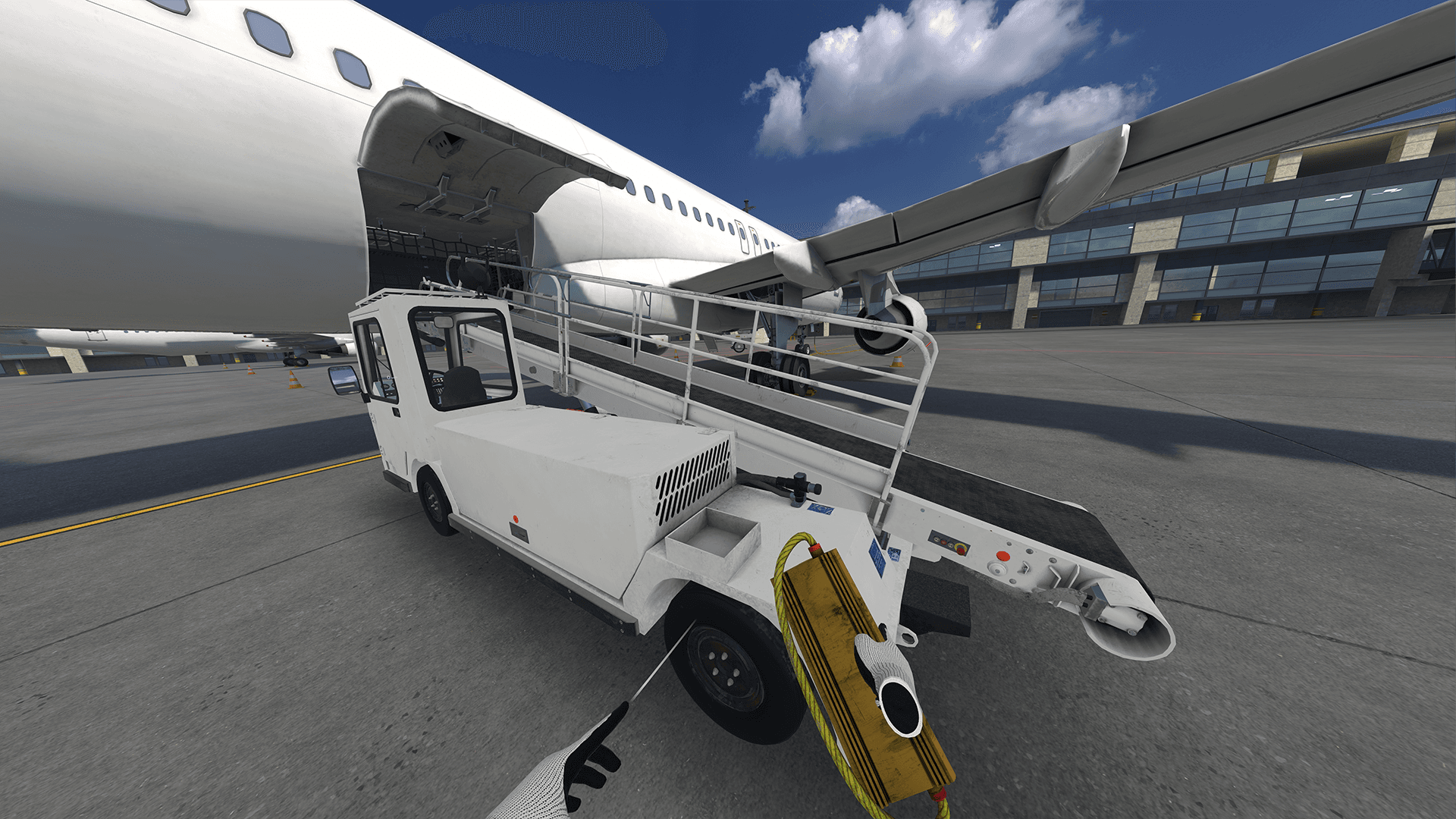
- After receiving the OK signal, the trainee shifts to neutral, applies the parking brake, and exits the cab. Exiting prematurely triggers a warning. The trainee retrieves two chocks and secures the front-left wheel to prevent movement.
- Deploy Guardrails
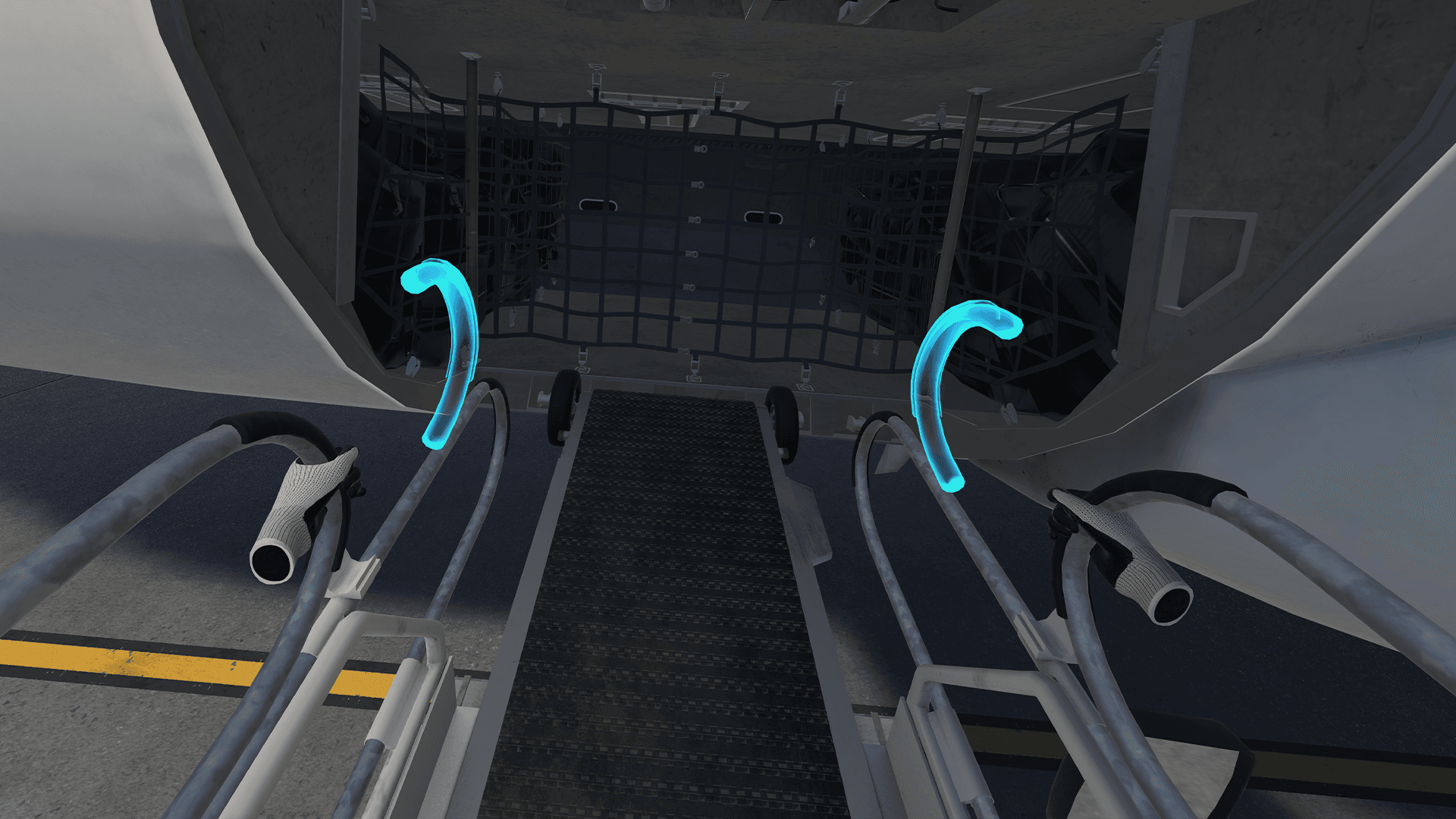
- Stepping onto the conveyor belt, the trainee kneels to extend the lower guardrails and then stands to deploy the upper ones. Extensions that are too short or excessive prompt feedback until properly adjusted.
- The session concludes with the belt loader correctly positioned, parked, and chocked, with guardrails appropriately extended extended.
Safety Scenarios & Learnings
Moving without signal
Immediate rewind reinforces the discipline of acting only on guide person instructions.
Immediate rewind reinforces the discipline of acting only on guide person instructions.
Overshoot/undershoot height
Corrective steps emphasize smooth boom control and accurate response to STOP commands.
Corrective steps emphasize smooth boom control and accurate response to STOP commands.
Driving too far
Crash simulation demonstrates the importance of early stopping and maintaining a safe clearance buffer.
Crash simulation demonstrates the importance of early stopping and maintaining a safe clearance buffer.
Lifting the boom’s rear end near the aircraft
Shows how raising the boom’s rear end forces the front side forward, resulting in a high-impact contact hazard.
Shows how raising the boom’s rear end forces the front side forward, resulting in a high-impact contact hazard.
Exiting before securing or improper chocking
Reinforces the complete park–neutral–brake–chock procedure for ramp safety.
Reinforces the complete park–neutral–brake–chock procedure for ramp safety.
Guardrails extended incorrectly
Shows the risk of insufficient protection if too short, or aircraft contact if extended too far—stressing correct, balanced deployment.
Shows the risk of insufficient protection if too short, or aircraft contact if extended too far—stressing correct, balanced deployment.
Gallery