Draxon VR Training Syllabus
Unloading: Inside the Aircraft
 Virtual Reality
Description
Prepares trainees to safely and ergonomically unload baggage from inside the aircraft cargo hold. The lesson trains correct posture, proper sliding techniques, and coordination with the outside colleague to ensure smooth, injury-free unloading under realistic conditions.
Lesson Overview
- 1Correct positioning and posture inside the cargo hold
- 2Confirmation and coordination with the outside colleague
- 3Two-step unloading sequence: pull out, then slide baggage onto the belt loader
- 4Repetition of unloading actions for five baggage pieces
- 5Lesson completion and summary of ergonomic handling principles
Skills Acquired
- Maintain ergonomic kneeling posture throughout unloading
- Apply correct two-step method for handling baggage
- Position baggage properly on the belt loader
- Coordinate with the colleague on the apron
- Handle multiple baggage items with consistent pace and precision
Lesson Procedure
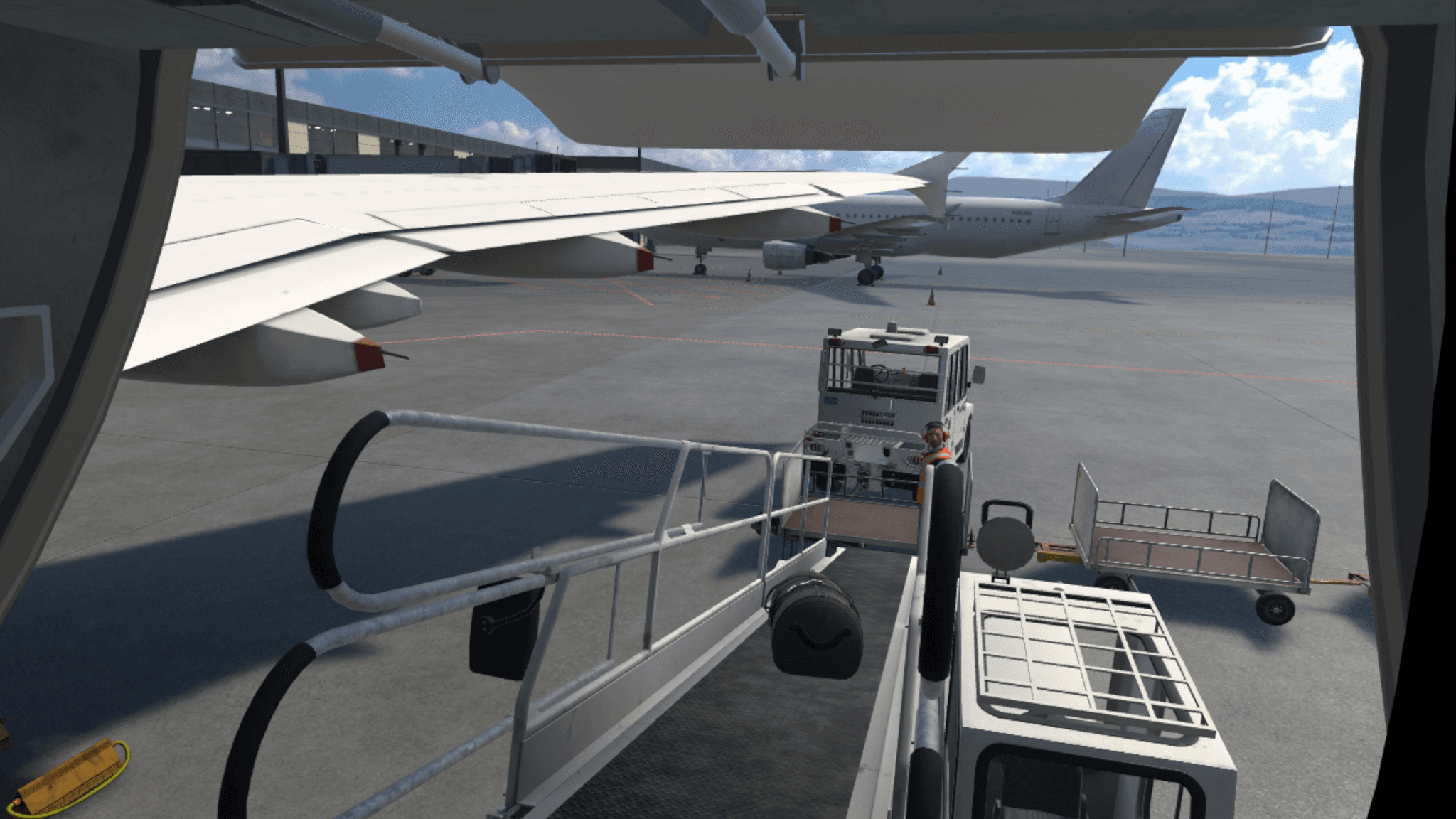
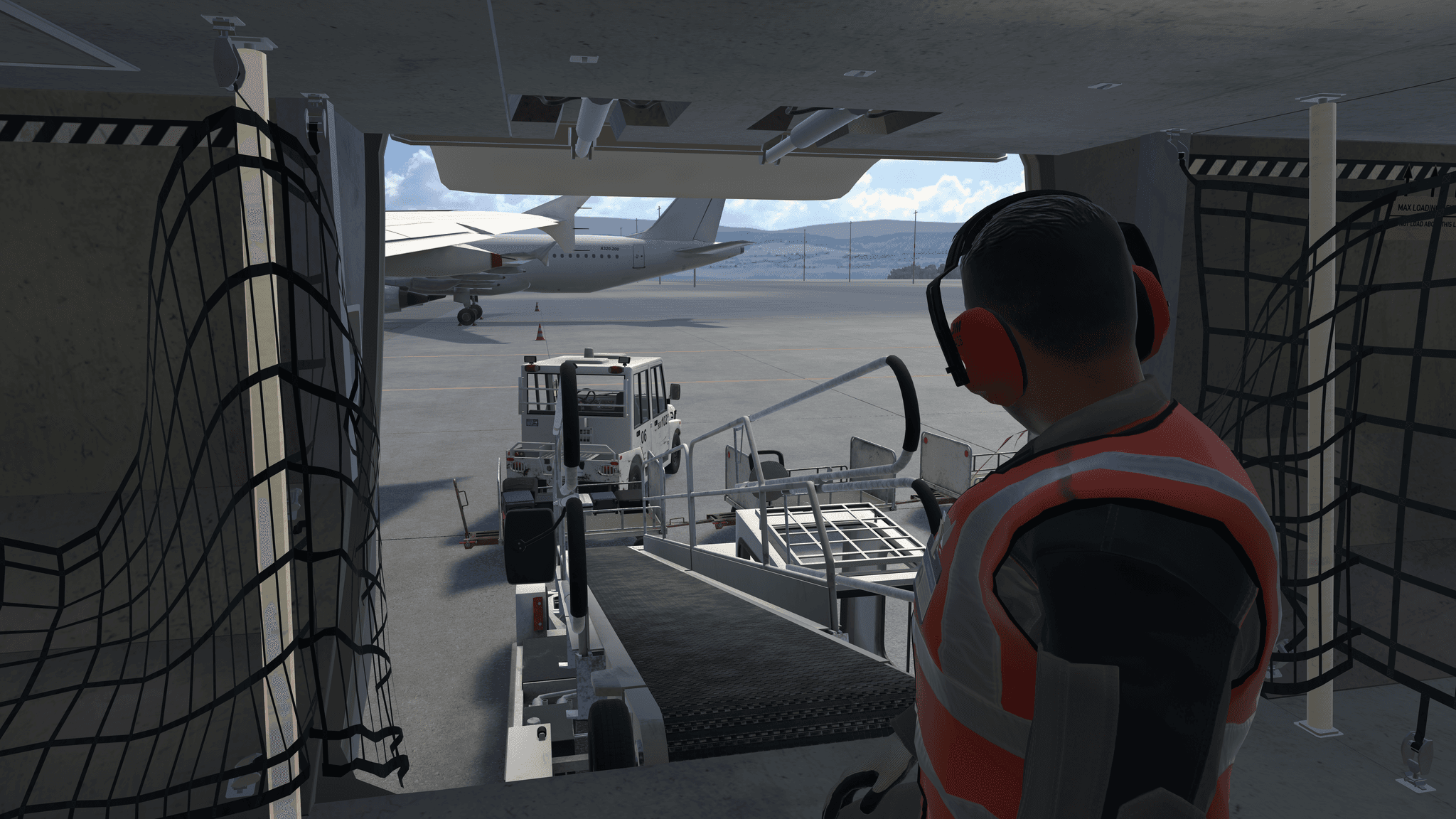
- The trainee starts kneeling inside the aircraft cargo hold. The belt loader is already operating, and the outside colleague waits by the carts below.
- The trainee looks outside to confirm readiness with the colleague before beginning. Once confirmed, the process instruction begin.
- The trainee follows a two-step method for each baggage item:
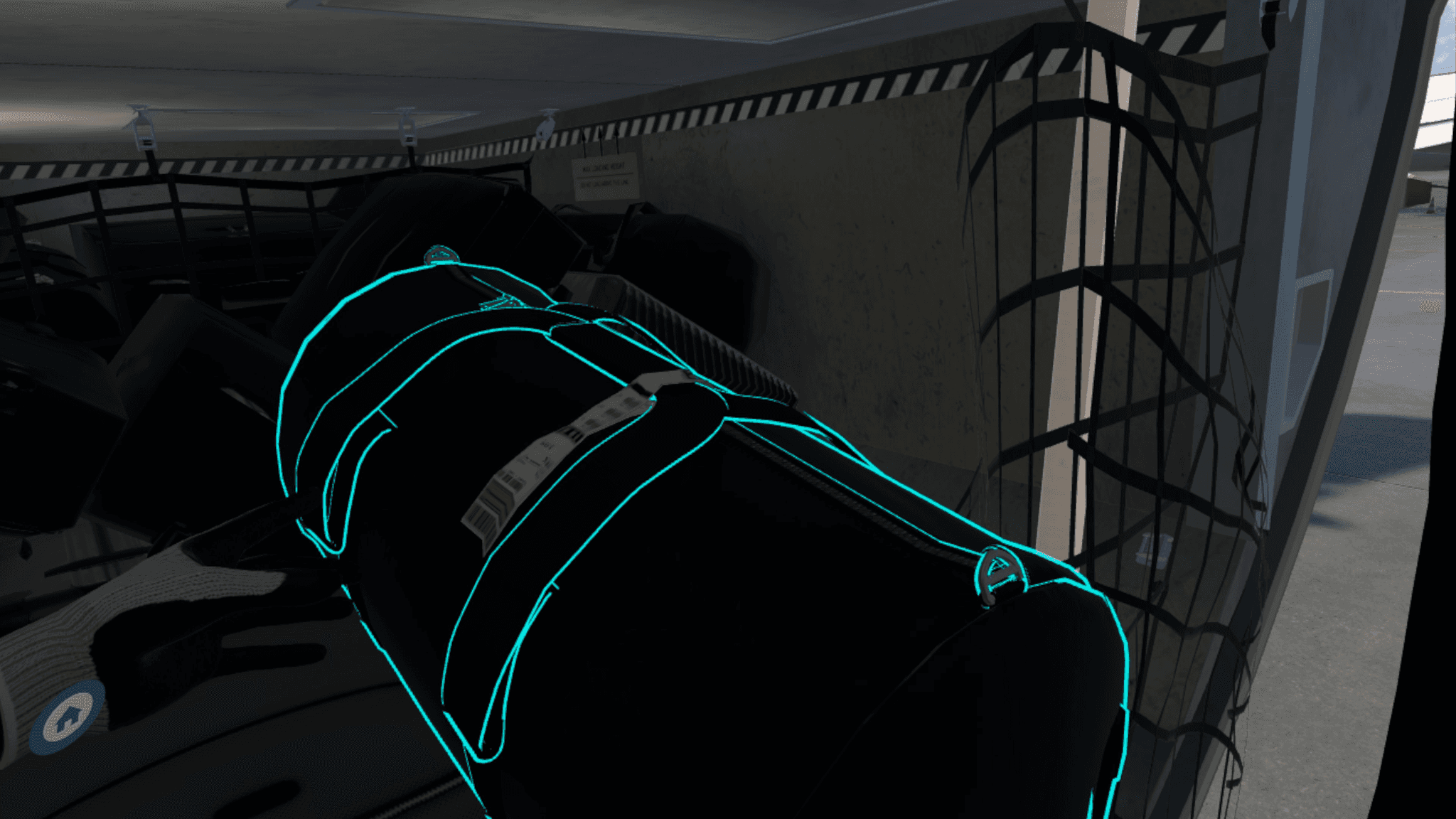
- Step 1: Grab the highlighted baggage piece and pull it out toward the body while keeping a stable kneeling posture.
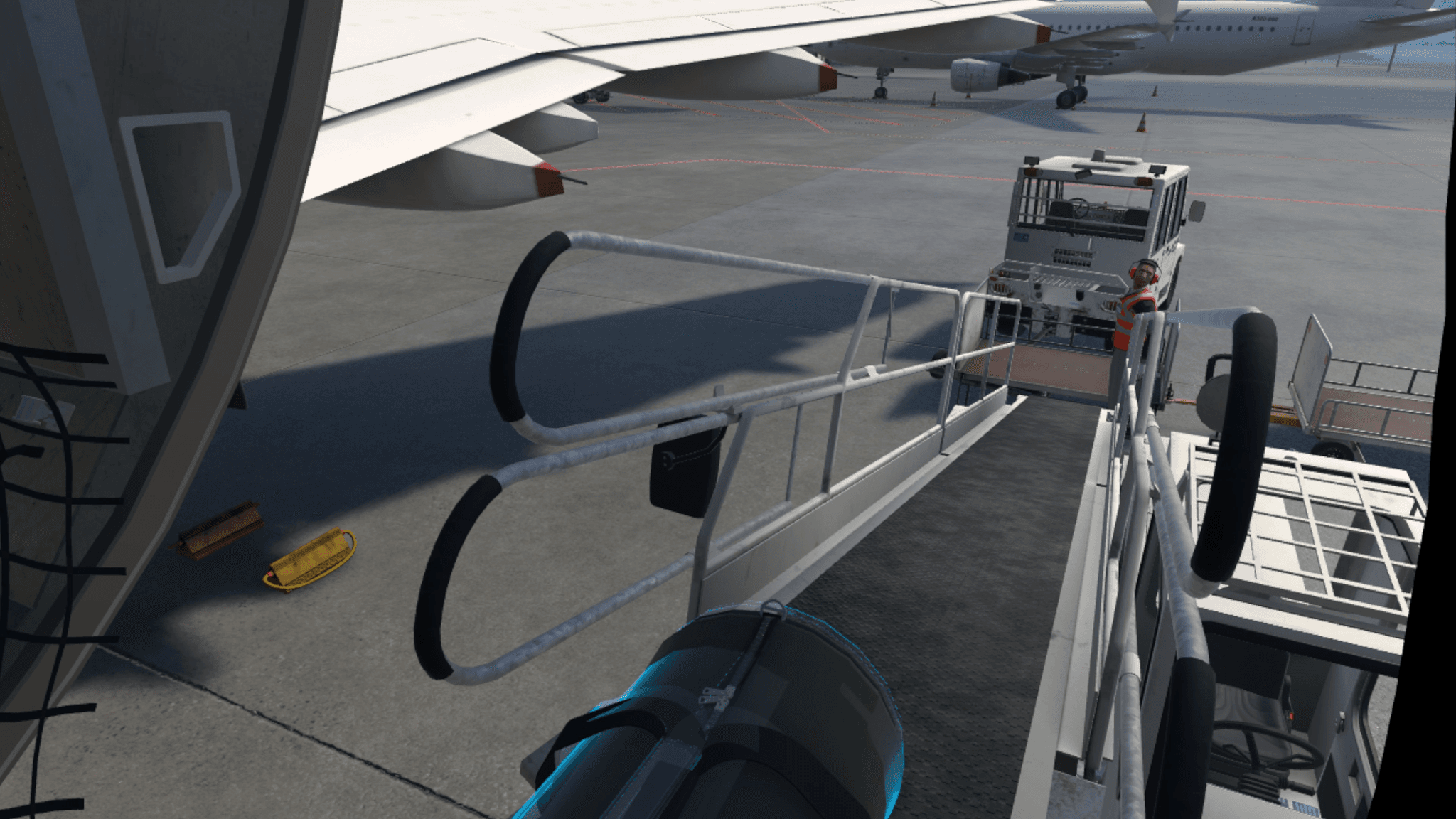
- Step 2: Slide the baggage over the cargo hold floor and position it correctly on the belt loader without lifting or touching the guardrails.
- Each correct placement is acknowledged with feedback, while delays, misplacement, or unsafe handling trigger corrective rewinds or reminders.
- The same sequence is repeated smoothly for five pieces of baggage, maintaining consistent posture and rhythm.
- Exception cases include slow performance, inactivity, or dropping baggage, each resulting in targeted feedback or lesson restart.
- The lesson concludes after successful unloading of all five pieces, confirming ergonomic precision, safe handling, and effective coordination with the outside colleague.
Safety Scenarios & Learnings
Throwing baggage off aircraft
Reinforces that baggage must be slid carefully, to prevent damage or injury.
Reinforces that baggage must be slid carefully, to prevent damage or injury.
Incorrect lifting posture
Demonstrates risk of strain and highlights correct ergonomic handling.
Demonstrates risk of strain and highlights correct ergonomic handling.
Attempting to lift baggage when sliding would be appropriate
The system prevents the action, reinforcing that baggage must always be slid onto the beltloader.
The system prevents the action, reinforcing that baggage must always be slid onto the beltloader.
Delay or inactivity
Encourages consistent rhythm and focus during operations.
Encourages consistent rhythm and focus during operations.
Failure to confirm with colleague
Emphasizes visual coordination before starting unloading.
Emphasizes visual coordination before starting unloading.
Incorrect placement on belt loader
Shows importance of accuracy and alignment when transferring baggage.
Shows importance of accuracy and alignment when transferring baggage.
Gallery