Draxon VR Training Syllabus
Speaking Practice - Advanced
 Virtual Reality
Description
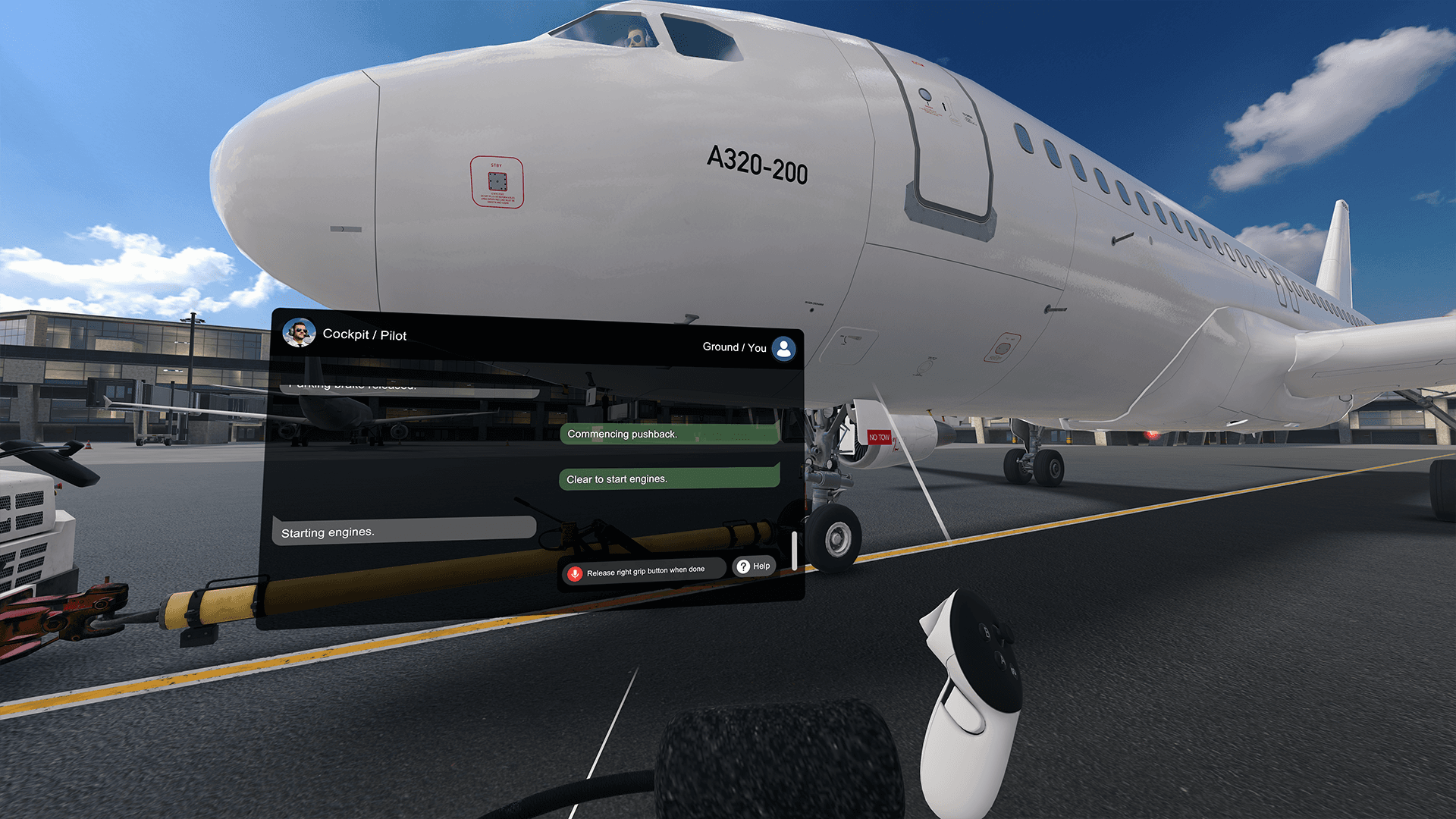
This lesson trains pushback headset communication in a full operational context, requiring trainees to recall and speak each phrase from memory. The exercise covers the complete sequence from radio check to the final all-clear hand signal, with scene transitions moving the trainee through a real pushback from gate to taxiway centerline. The focus is on recalling correct phraseology at the right moment and delivering confident, fluent communication under operational conditions.
Lesson Overview
- 1Introduction to the advanced format — no phrases displayed; voice recognition system overview
- 2Radio check, crew identification, and pre-departure safety confirmations at the gate
- 3Commencing pushback, engine start clearance during the pushback, and final position communication
- 4Equipment disconnect, bypass pin handover, all-clear hand signal, and option to repeat
Skills Acquired
- Recall standard pushback phraseology from memory and deliver it at the correct moment during live operations
- Execute the complete communication sequence from pre-departure checks through final disconnect without reference aids
- Recognize when to issue engine start clearance based on pushback progress and area conditions
- Understand the full sequence and timing of pushback communication phases in an operational context
Lesson Procedure
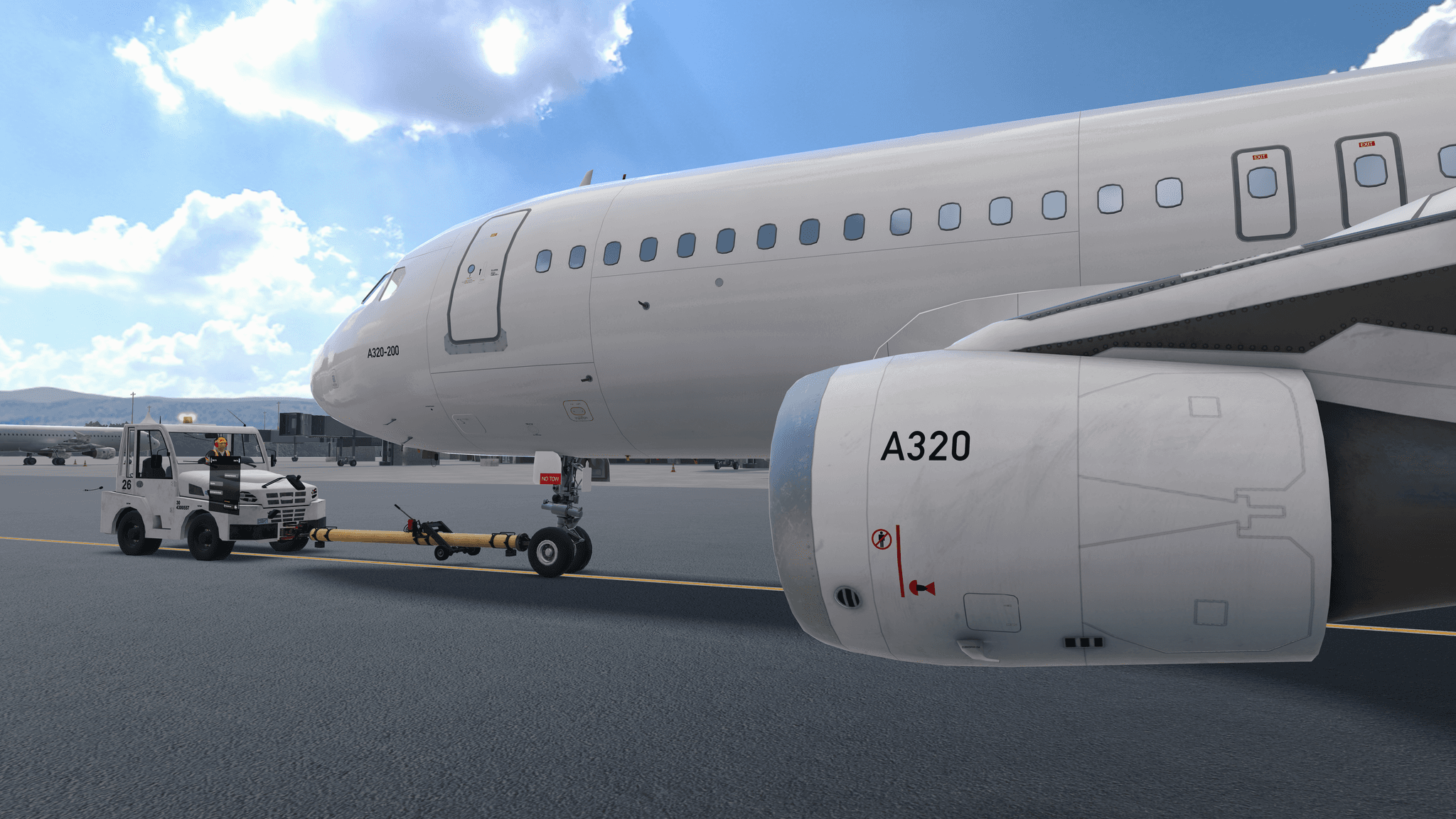
- The lesson is set at the gate for a real pushback scenario; the steering bypass pin is already inserted and the headset is on. A brief tutorial introduces the microphone mechanic before the training begins.
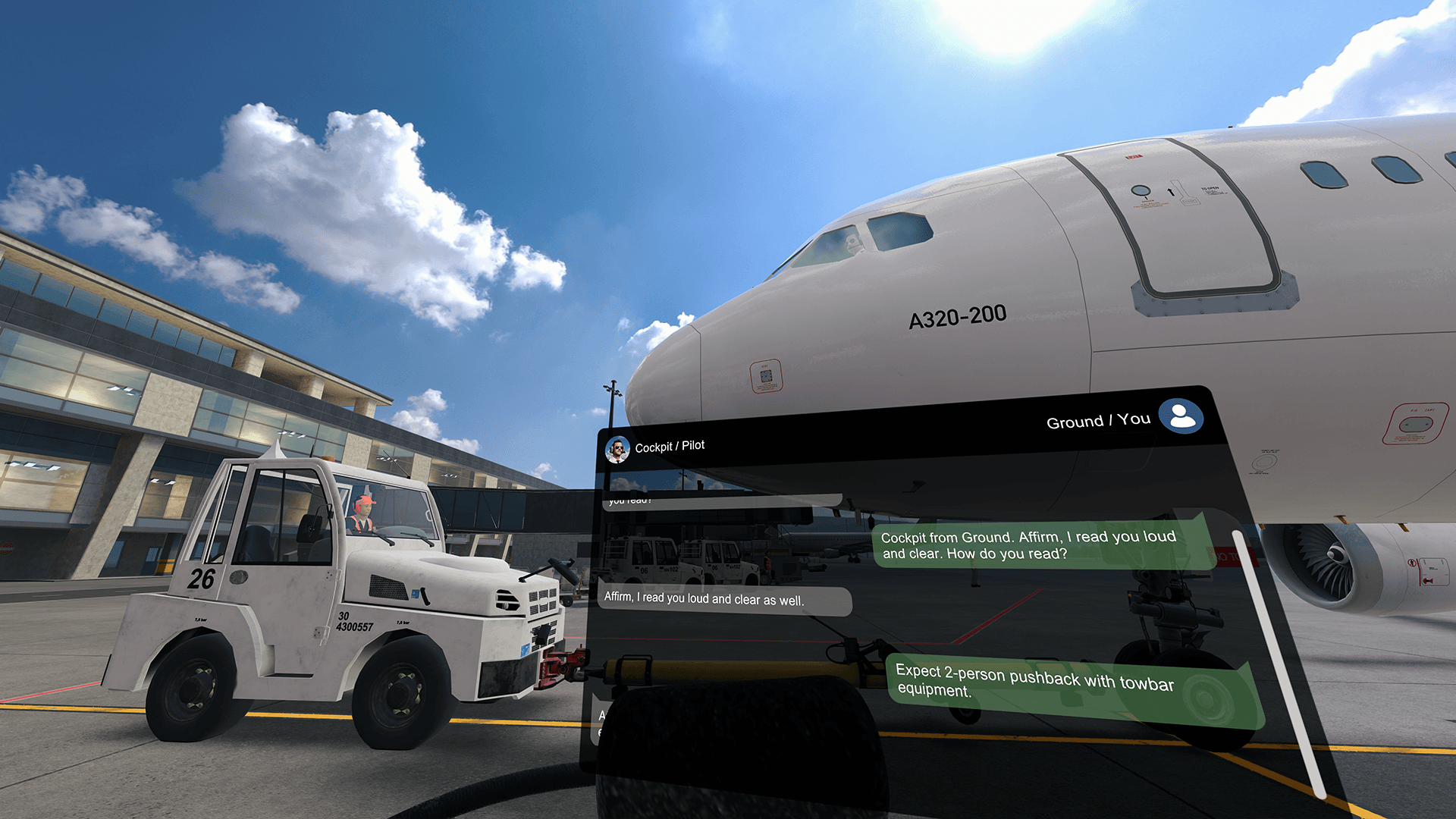
- The cockpit initiates a radio check; the trainee responds with the standard readability confirmation, then communicates the pushback crew size and equipment type to the cockpit.
- The trainee works through pre-departure checks: confirming parking brake set, acknowledging bypass pin inserted, stating pre-departure checks complete, and signaling ready for pushback.
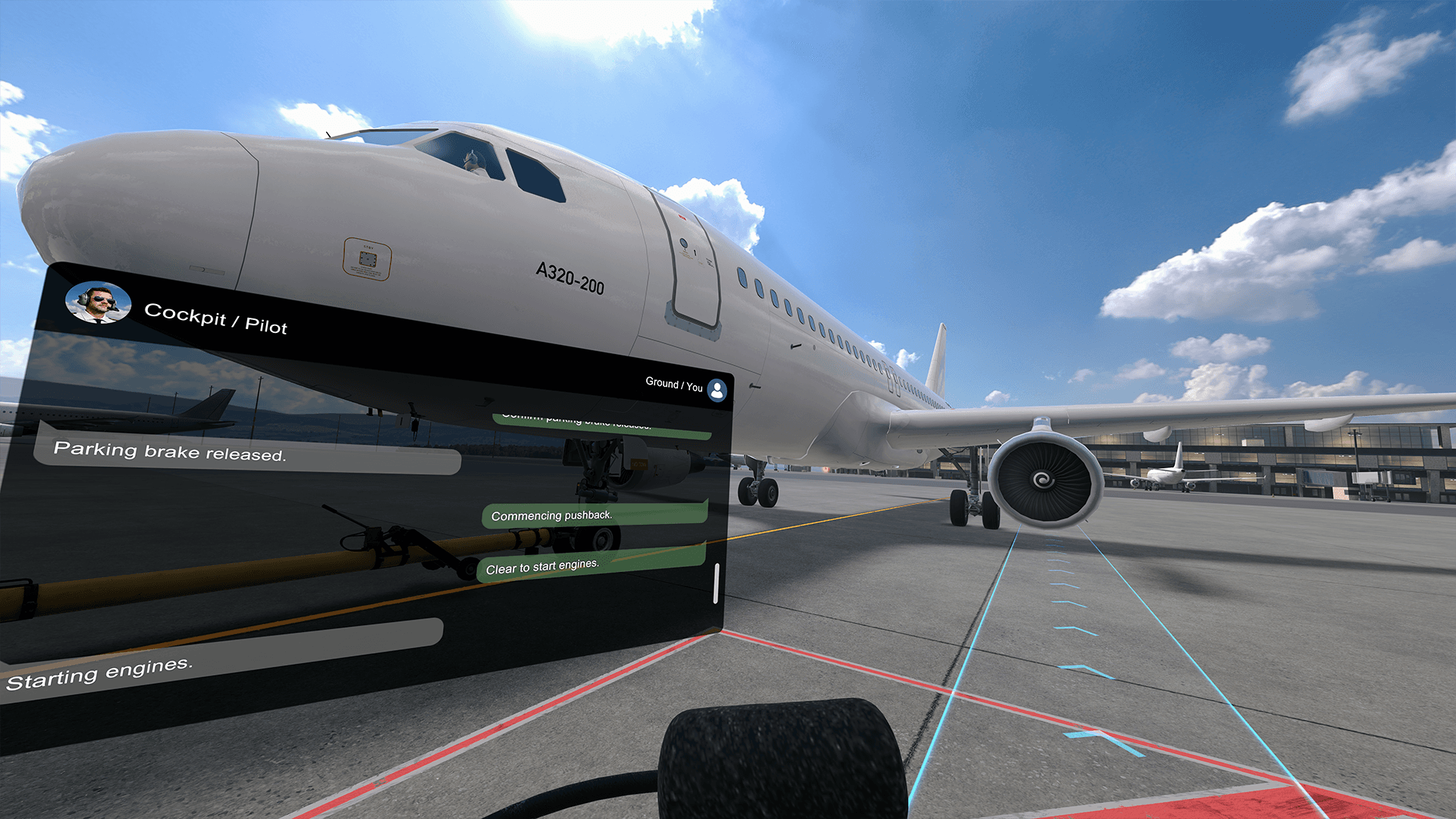
- The cockpit receives ATC clearance; the trainee requests parking brake release and announces commencing pushback. The scene fast-forwards through the pushback movement to the engine start clearance moment.
- Walking alongside the aircraft with the gate area clear and conditions confirmed safe, the trainee communicates engine start clearance. The scene fast-forwards again, to the final position on the taxiway centerline.
- At the final position, the trainee requests parking brake set, receives engine start complete confirmation, and announces disconnecting with the hand signal side. The scene transitions to the left side of the aircraft.
- The trainee holds the steering bypass pin above their head until the pilot makes eye contact, delivers the all-clear hand signal to clear the aircraft for taxi.
- The lesson concludes and the trainee can chose to repeat the process for additional training.
Communication Sequence
Cockpit | Headset Operator |
|---|---|
Ground from Cockpit. Radio check, how do you read? | |
Cockpit from Ground. Affirm, I read you loud and clear. How do you read? | |
Affirm, I read you loud and clear as well. | |
Expect 2-person pushback with towbar equipment. | |
Affirm, 2-person pushback with towbar equipment. | |
Confirm parking brake set. | |
Parking brake set. | |
Confirm steering bypass pin inserted. | |
Steering bypass pin inserted. | |
Pre-departure checks completed. | |
Ready for pushback. | |
Standby. | |
Pushback approved. | |
Confirm parking brake released. | |
Parking brake released. | |
Commencing pushback. | |
Clear to start engines. | |
Pushback complete. Set parking brake. | |
Engine start complete. Clear to disconnect. | |
Disconnecting. Wait for the hand signal on your left. | |
Holding position and standing by for hand signal on the left. |
Safety Scenarios & Learnings
Incorrect phraseology used
Response is rejected and a retry prompted; reinforces that standard phraseology must be used.
Response is rejected and a retry prompted; reinforces that standard phraseology must be used.
Unclear or unintelligible speech
Response is rejected and a retry prompted; reinforces that each phrase must be delivered clearly and at a controlled pace for reliable communication on the ramp
Response is rejected and a retry prompted; reinforces that each phrase must be delivered clearly and at a controlled pace for reliable communication on the ramp
Gallery