Draxon VR Training Syllabus
Basics
 Virtual Reality
Duration
9-10 Minutes
Training Type
Initial Training
IATA Standard
IATA AHM 1110, Edition 46 & IATA IGOM, Edition 14
Languages
English, German, Dutch, Spanish, French, Greek, Arabic
Description
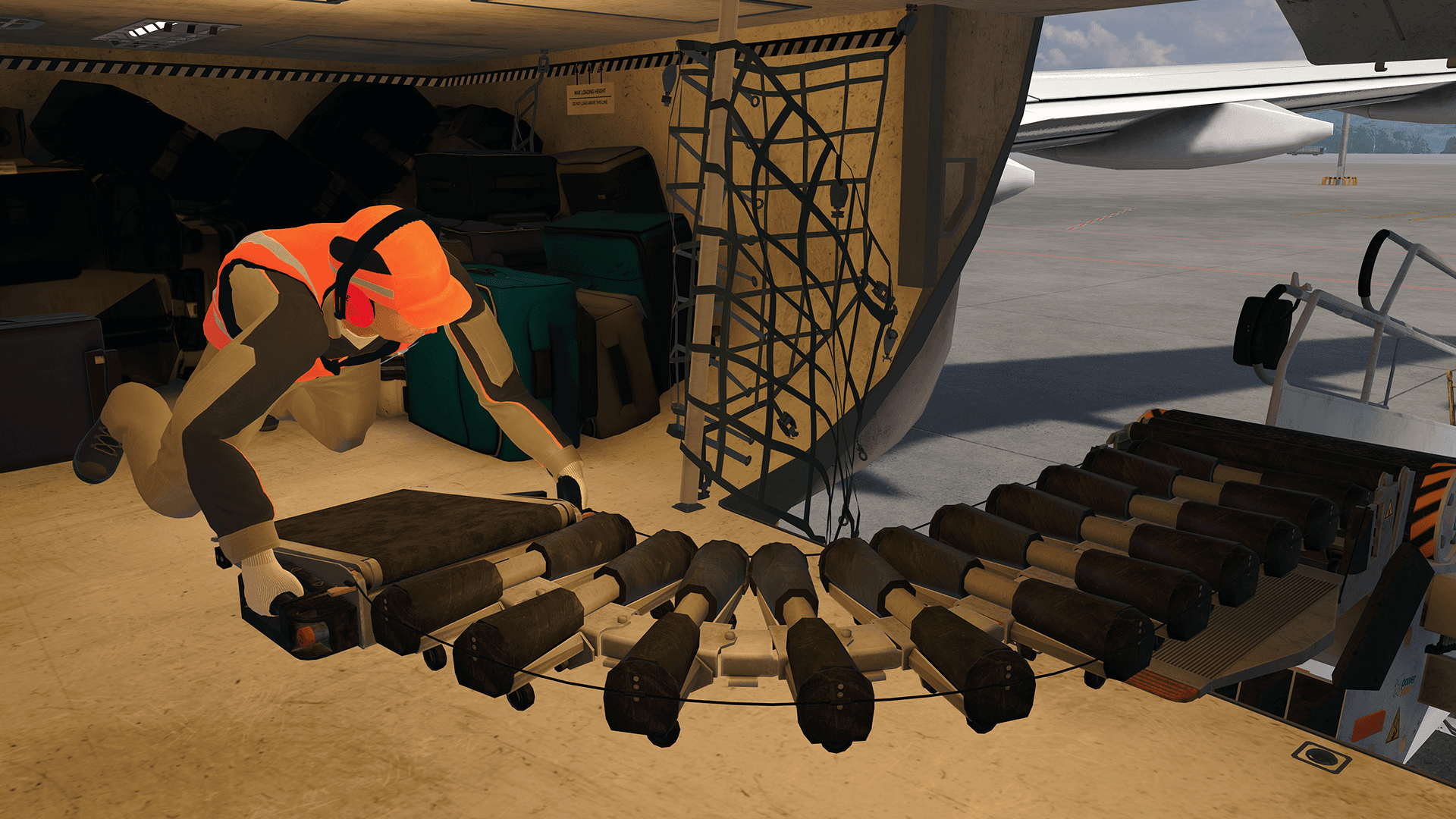
This lesson introduces the Power Stow Rollertrack Conveyor system through observation and component identification. Trainees observe a complete demonstration of Power Stow operation inside an aircraft cargo hold. The lesson then examines key components including movement handles, height adjustment handles, and emergency stop buttons.
Lesson Overview
- 1Observe a complete operation demonstration from inside the cargo hold showing extension, activation, baggage loading, direction change, speed adjustment, height adjustment, and retraction
- 2Examine Power Stow components in detail in a parking lot environment
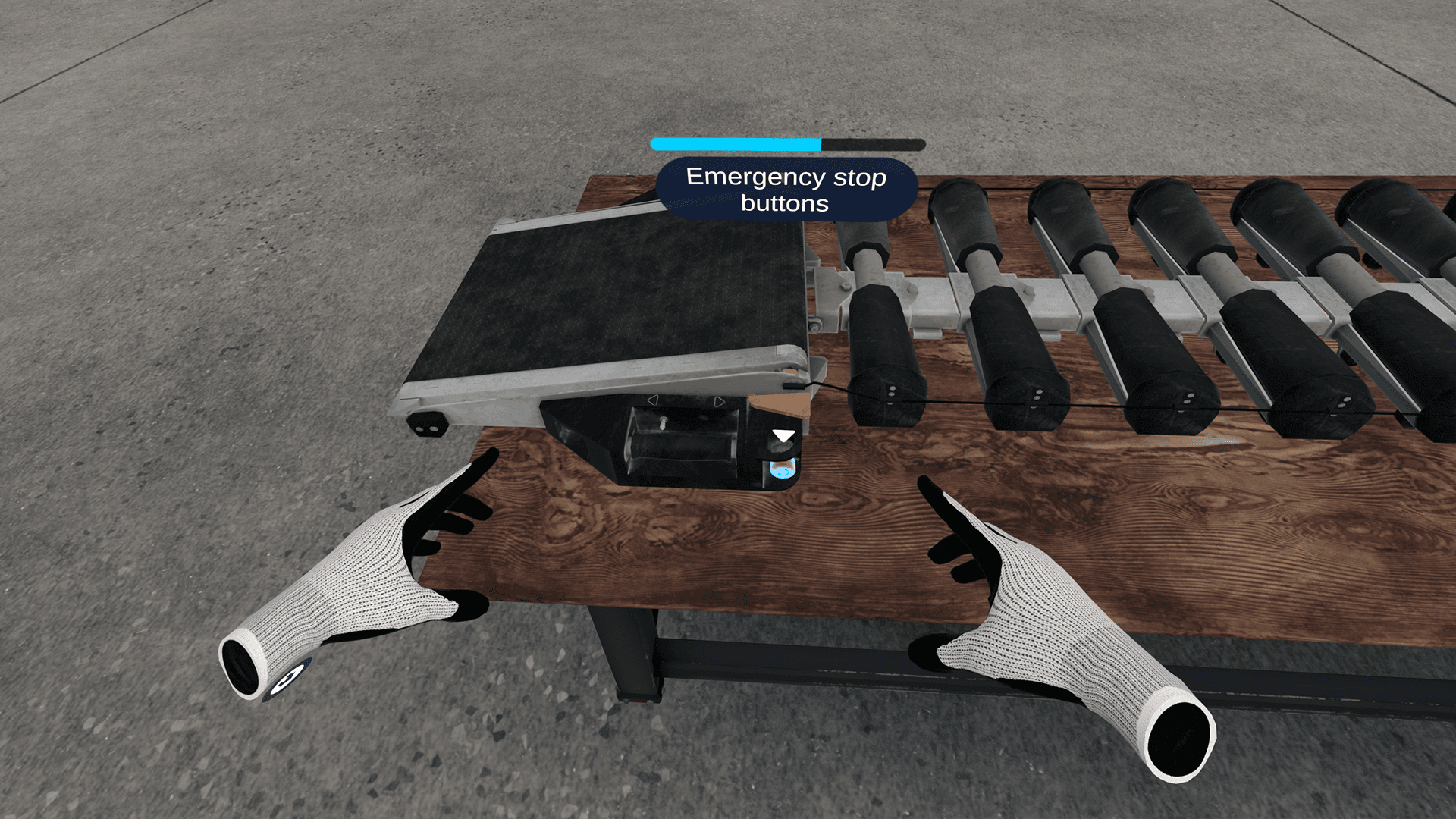
- 3Identify and learn the function of movement handles, toggle switches, height adjustment handles, emergency stop buttons, and front light
Skills Acquired
- Recognize the Power Stow Rollertrack Conveyor system and understand its role in reducing manual baggage handling
- Identify the movement handles and understand light sensor activation for system extension and retraction
- Understand toggle switch functions for starting, stopping, direction control, and speed adjustment
- Recognize height adjustment capabilities for accessing baggage at different cargo hold levels
- Locate emergency stop buttons for immediate system shutdown in safety situations
Lesson Procedure
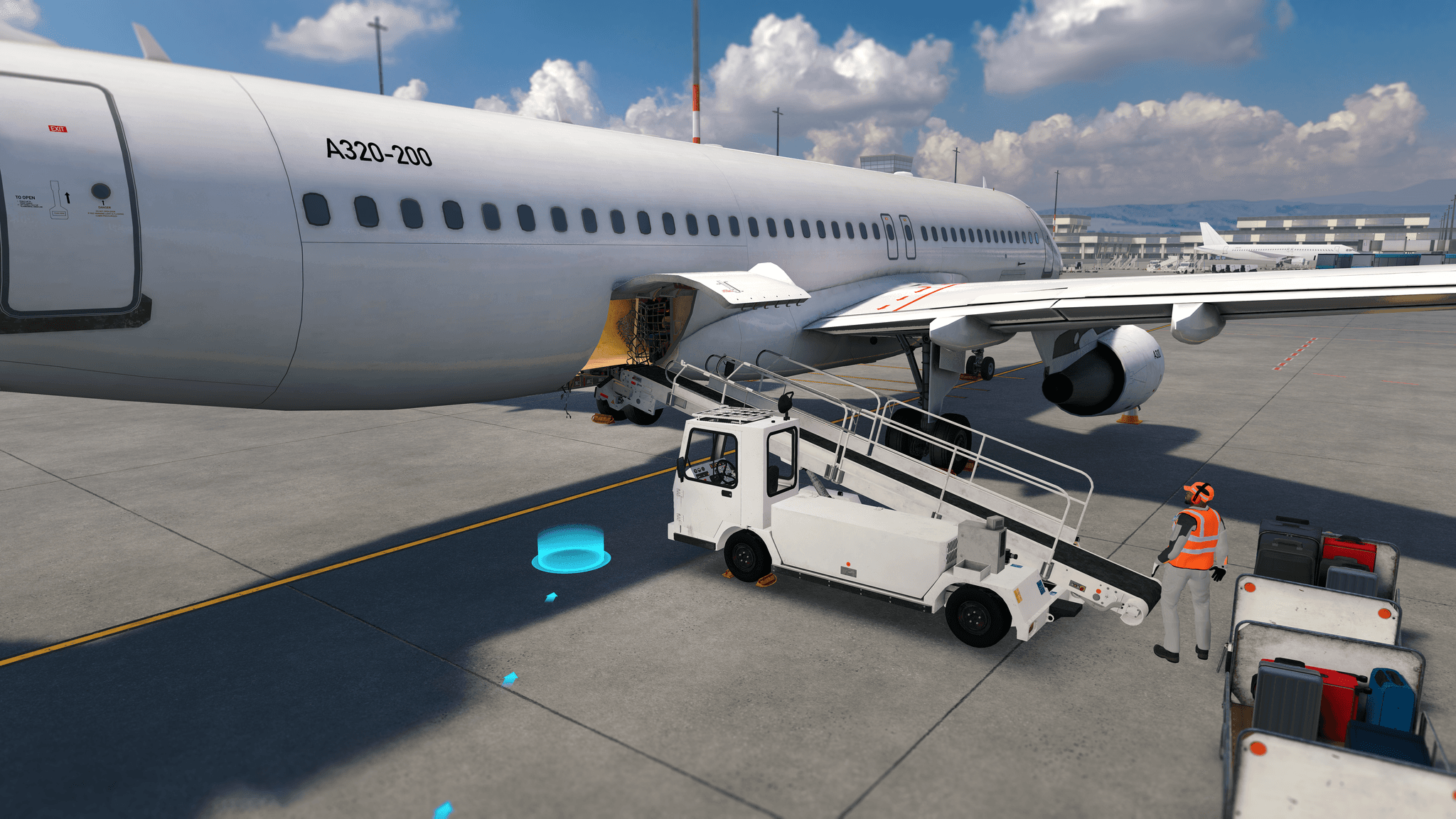
- The lesson starts at an active aircraft turnaround with a belt loader and Power Stow positioned at the cargo hold; a colleague stands inside the cargo hold ready to demonstrate.
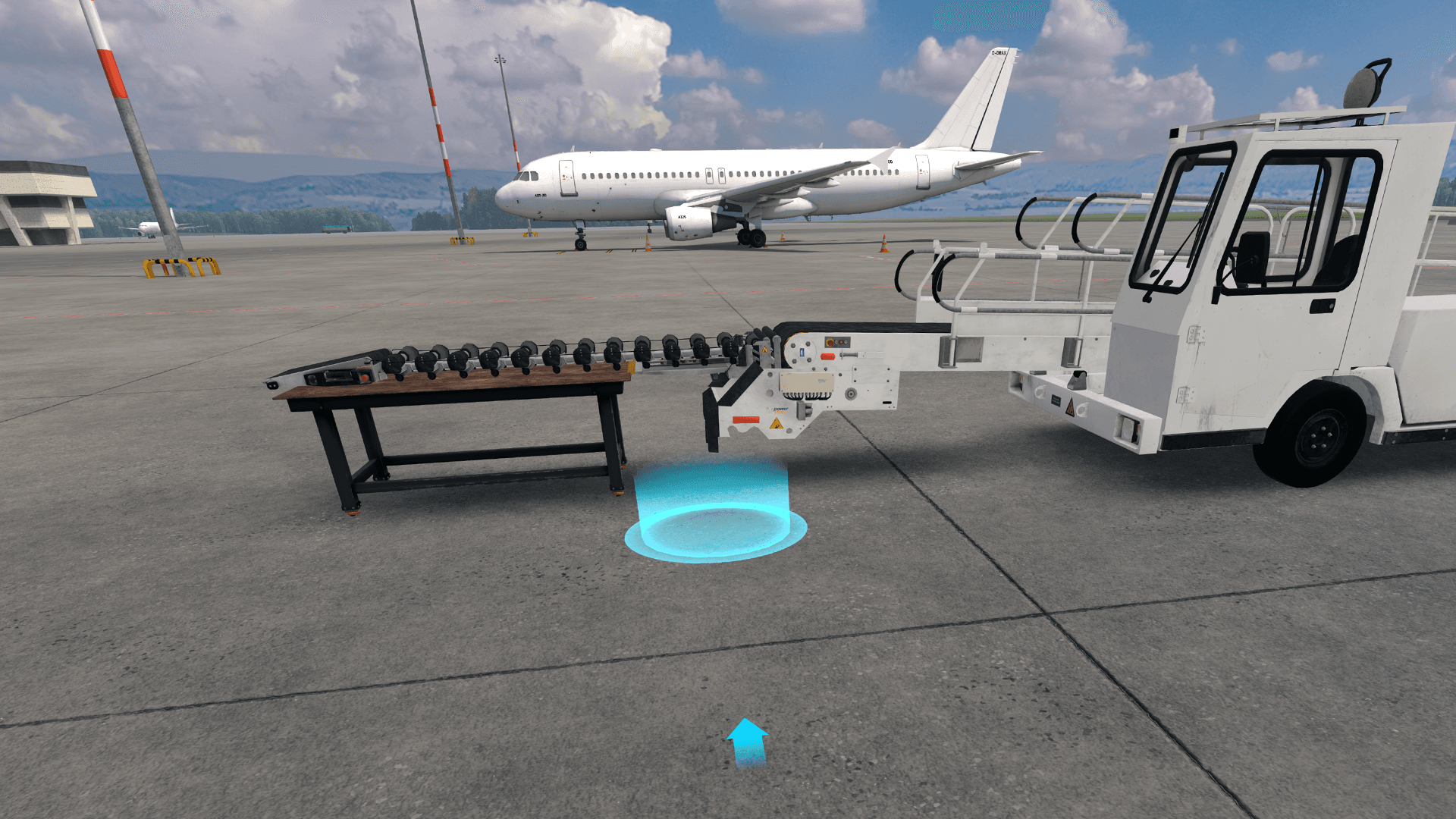
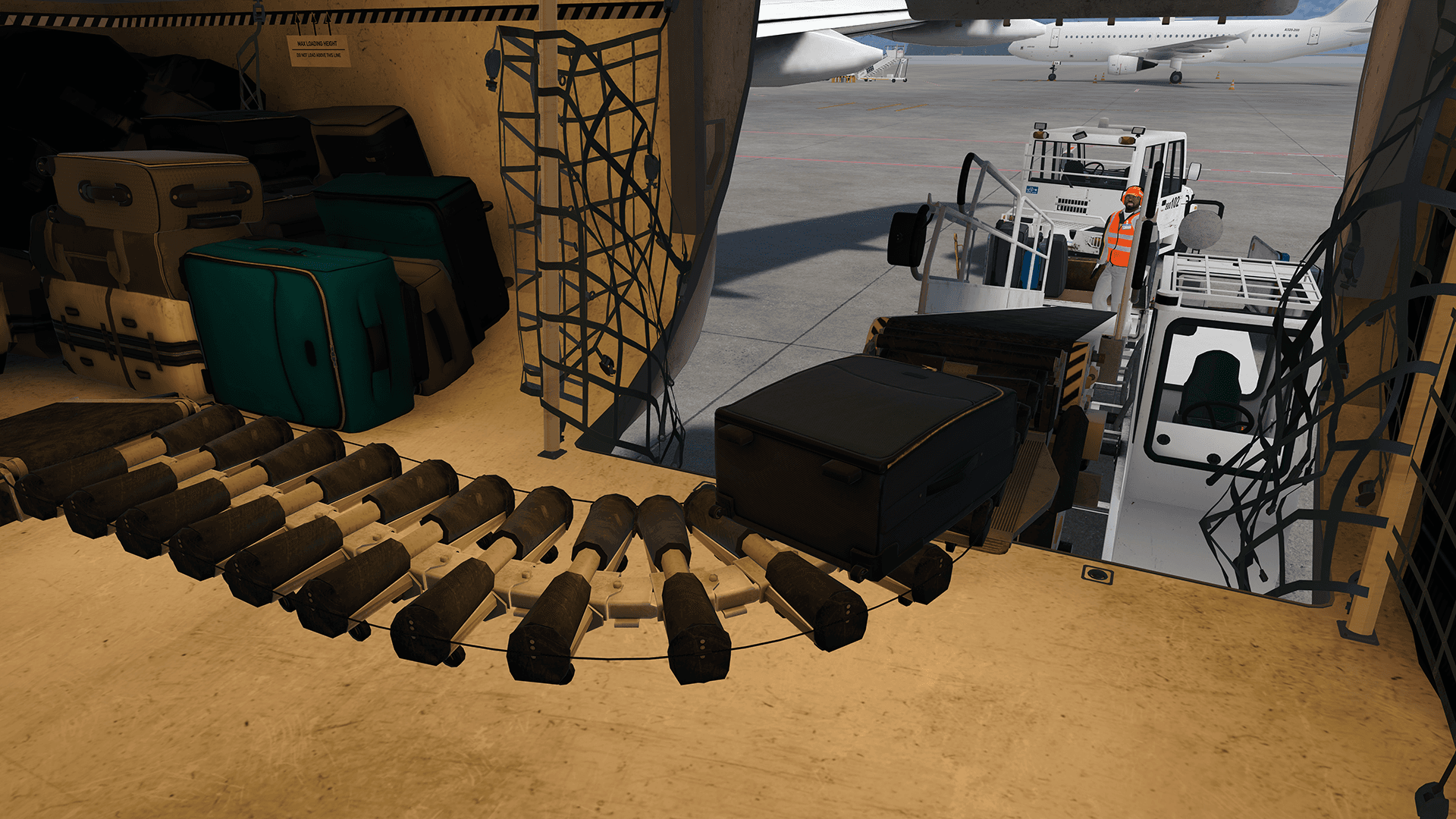
- The Power Stow system attached to the belt loader is visible with its flex ramp docked in the cargo hold.
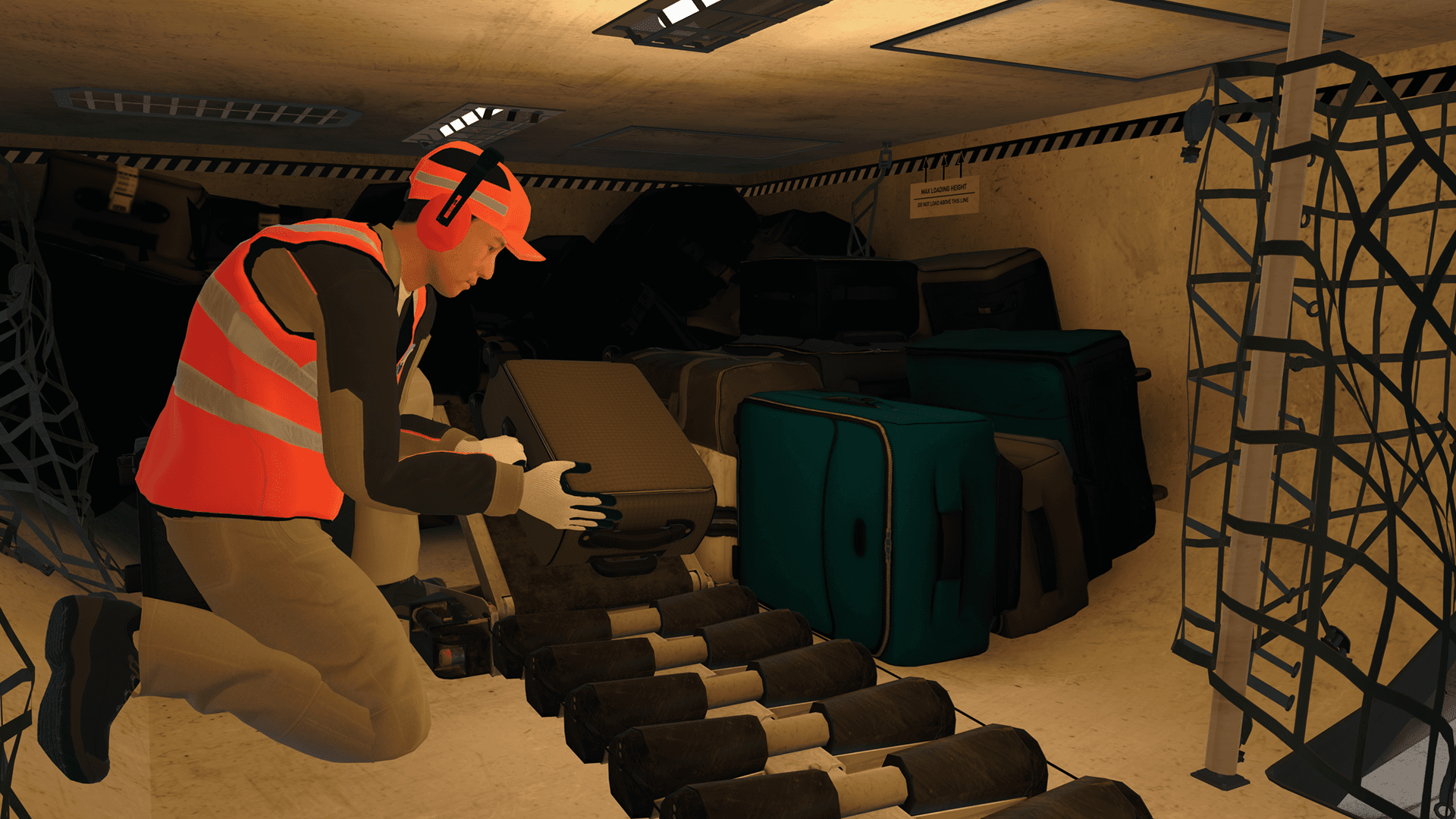
- Inside the cargo hold the trainee observes the colleague's demonstration of the complete operation cycle.
- The colleague grabs a movement handle to trigger the light sensors, then pushes the handle back to extend the Power Stow while moving sideways on their knees toward the baggage.
- Once positioned, the colleague activates the switch and the Power Stow and belt loader begin moving.
- Another colleague at the baggage cart loads baggage onto the belt loader, which travels into the cargo hold where it is retrieved and stored.
- The colleague stops the Power Stow with the toggle switch, then activates it in the opposite direction to reverse both the Power Stow and belt loader.
- The colleague adjusts the height to raise the Power Stow's front end, retrieves baggage from a higher stack, and moves it across the Power Stow down the belt loader.
- Finally, the colleague turns off the Power Stow, grabs the handles, and pushes forward while moving on their knees to retract the system to the starting position.
- The environment transitions to a parking lot where the Power Stow is extended for a detailed component examination, covering the toggle switches, movement handles with light sensors, height adjustment handles, emergency stop buttons on both sides, and the front light.
Gallery