Draxon VR Training Syllabus
Operating at the Aircraft
 Virtual Reality
Description
This lesson trains the complete procedure for preparing towable passenger stairs at the aircraft door. Trainees learn to extend and secure the handrails with precision, coordinate with the cabin crew, and confirm the equipment is safe for boarding and disembarking operations. The focus is on accuracy, communication, and adherence to the no-touch policy to prevent damage to the aircraft fuselage or door.
Lesson Overview
- 1Prepare the towable stairs by opening the belt barrier and safety gate
- 2Extend both handrails precisely, maintaining safe clearance from the aircraft fuselage and door
- 3Coordinate with the cabin crew through knock and thumbs-up signals to allow door opening
- 4Secure the safety gate and confirm the stairs are ready for passenger use
Skills Acquired
- Operate and secure towable stairs safely at the aircraft door
- Extend and align handrails with precise clearance to the aircraft fuselage and door
- Coordinate actions and communicate effectively with the cabin crew
- Verify equipment stability and readiness for safe passenger boarding and disembarking
Lesson Procedure
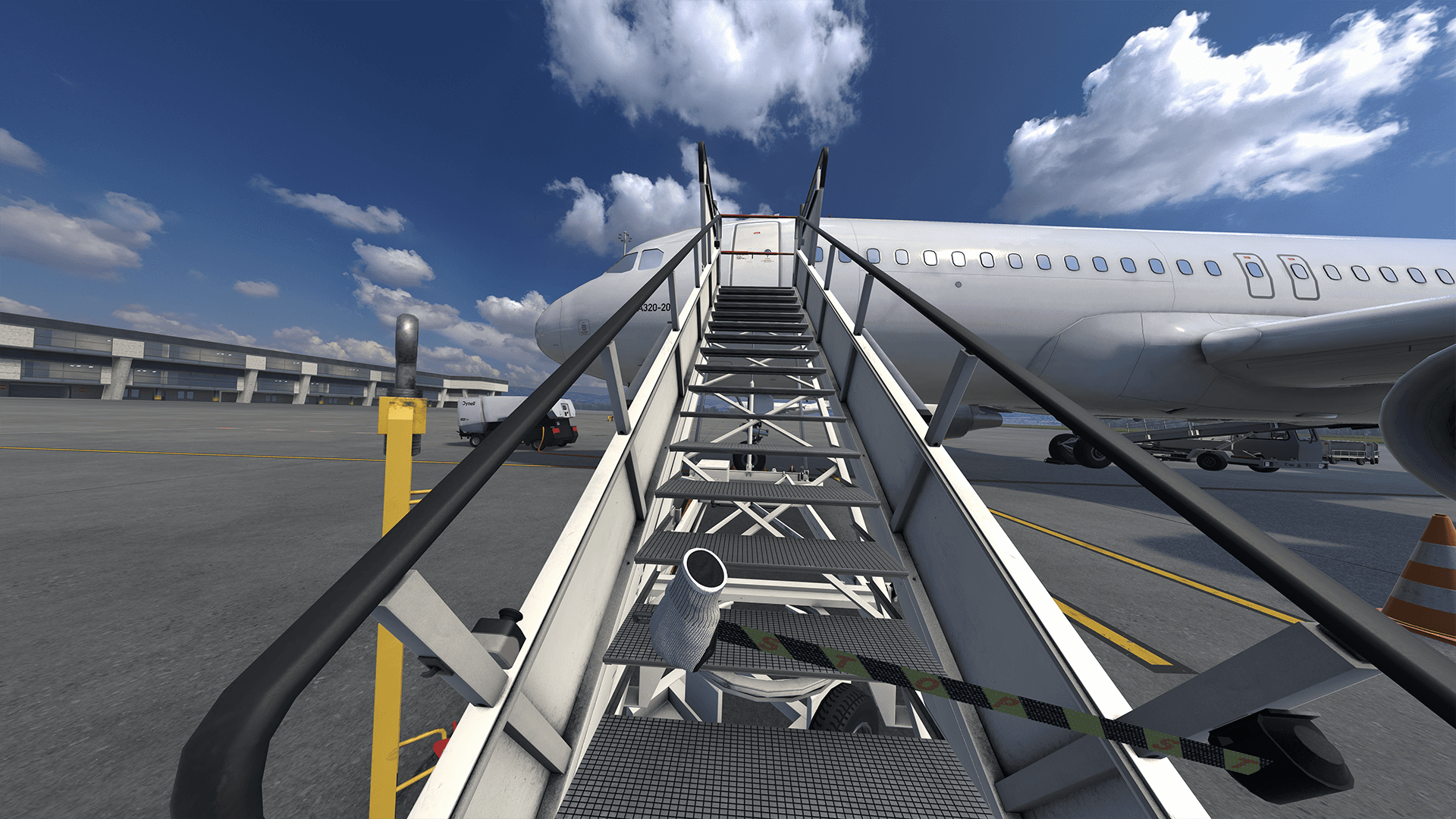
- The trainee begins at the bottom of the towable stairs, facing the closed belt barrier.
- Guided instructions prompt the trainee to open the belt barrier by unhooking and pulling it aside, then step upwards to the towable stairs platform to lift and fold the safety gate inward to clear the access path to the stairs. This action ensures the platform is open
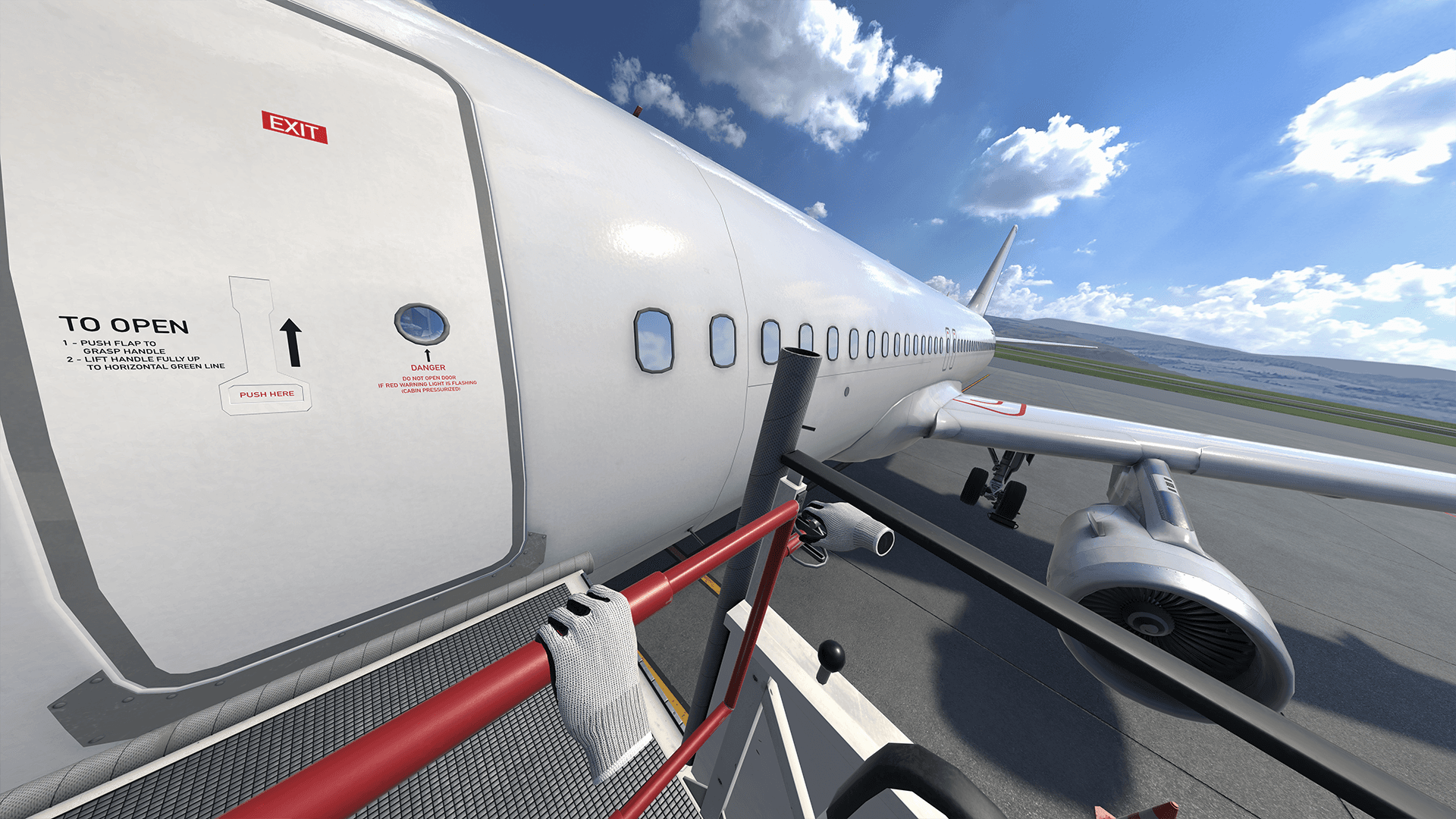
- The trainee walks to the right-hand side, grips the front knob and handrail, and extend the right handrail forward until it aligns closely with the aircraft fuselage, maintaining a small clearance. Extending too far triggers a collision warning and rewind.
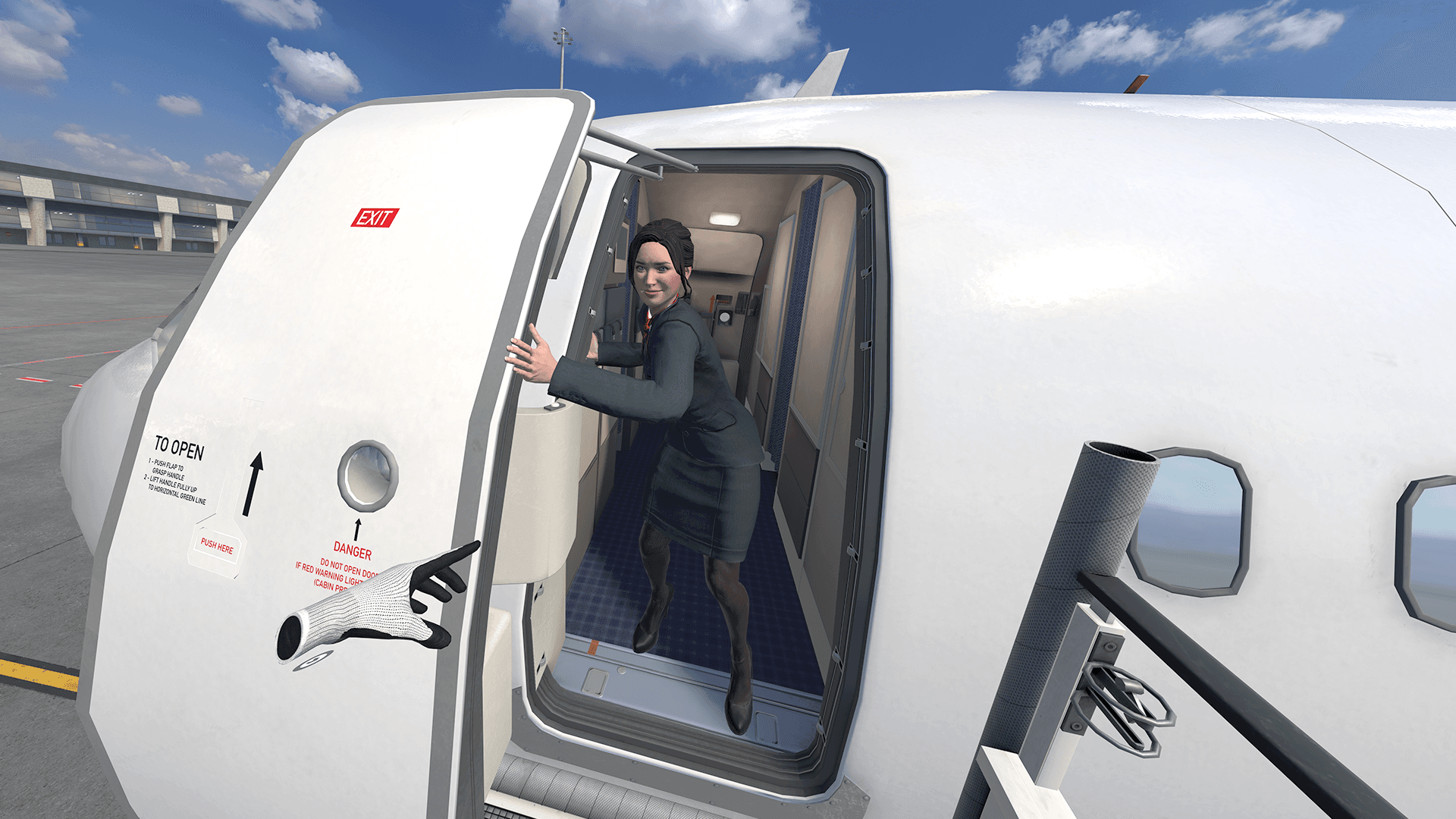
- Next, the trainee knocks on the aircraft door, and after the cabin crew member looks through the window in the door, the trainee shows a thumbs-up gesture to the cabin crew. The cabin crew responds by opening the aircraft door.
- Once the aircraft door is fully open, the trainee moves to the left-hand side and extends the left handrail until it aligns closely with the aircraft fuselage. Pushing the rail too far results in an error and rewind.
- After extending both handrails, the trainee folds the safety gate inward to complete the preparation.
- A final thumbs-up gesture to the cabin crew confirms the stairs are ready for use.
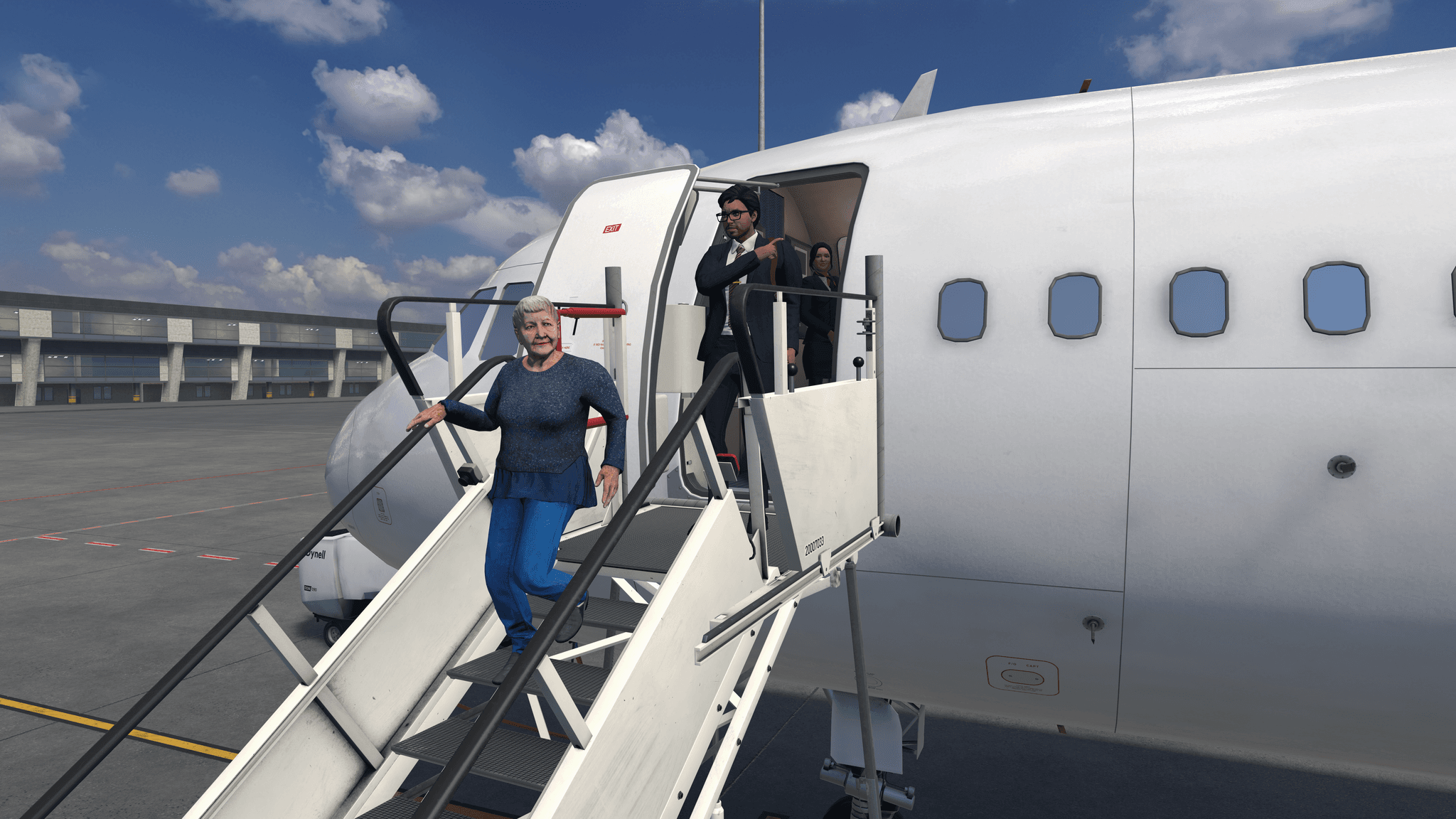
- The trainee walks down the stairs to trigger the closing animation. Depending on whether the handrails were properly shaken to confirm locking, different outcomes play out:
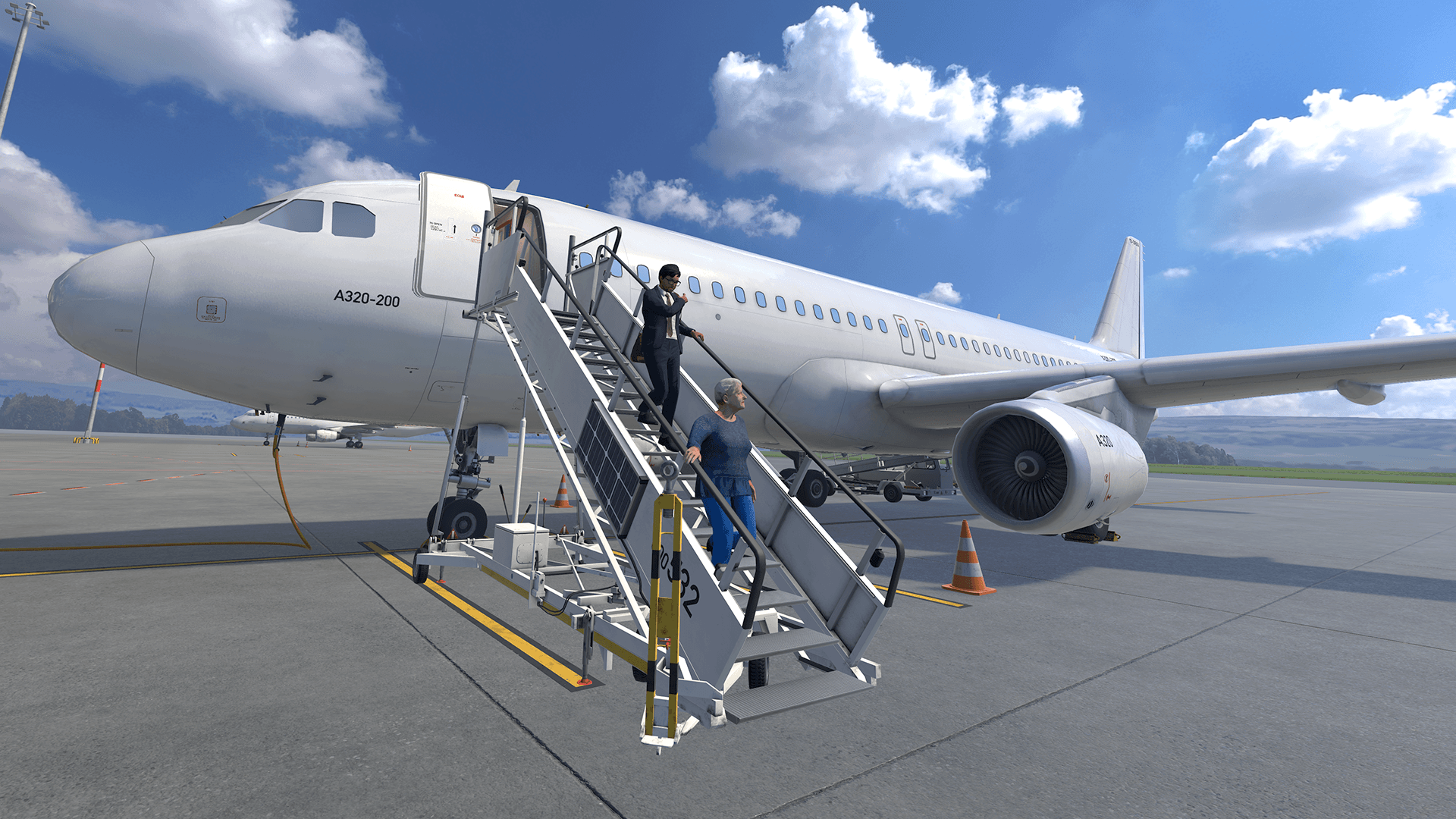
- Correct procedure: Passengers descend safely, using the rails properly.
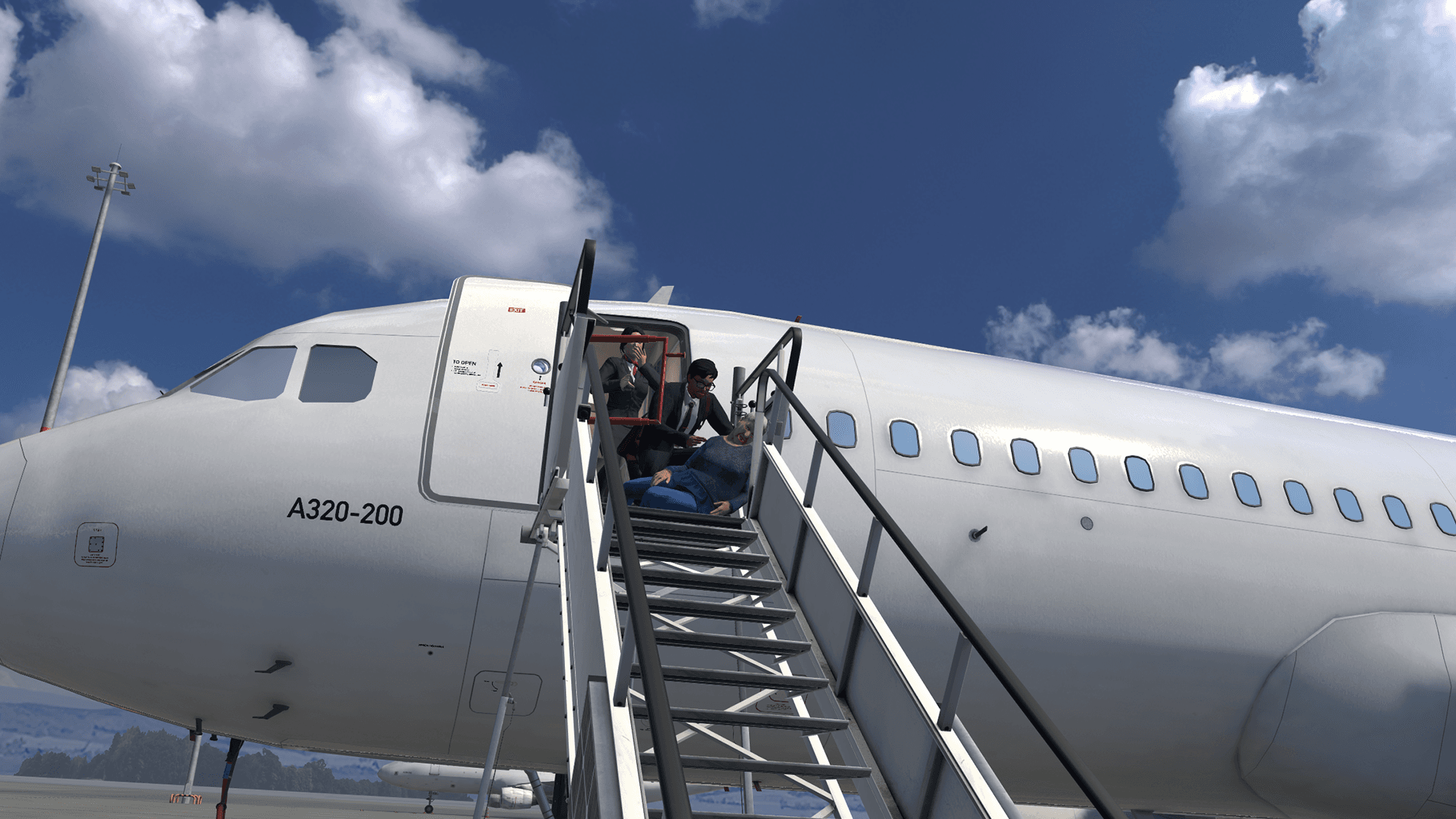
- Missed safety shake check : The right handrail collapses as a passenger grabs it, causing a near fall and triggering a rewind.
- The lesson concludes once both rails have been properly tested and the stairs are declared safe for operation.
Safety Scenarios & Learnings
Handrail pushed too far
Triggers error and rewind, reinforcing the no-touch policy to prevent aircraft damage.
Triggers error and rewind, reinforcing the no-touch policy to prevent aircraft damage.
Handrail not tested by shaking
Causes rail collapse during passenger animation, demonstrating the importance of engaging the safety pin of each handrail by safety-shaking.
Causes rail collapse during passenger animation, demonstrating the importance of engaging the safety pin of each handrail by safety-shaking.
Incorrect clearance to fuselage or door
Visual feedback shows unsafe distance, training precision in alignment and positioning.
Visual feedback shows unsafe distance, training precision in alignment and positioning.
Entering the aircraft
Triggers feedback, reinforcing proper procedures and maintaining an appropriate distance during boarding operations.
Triggers feedback, reinforcing proper procedures and maintaining an appropriate distance during boarding operations.
Falling off the towable stairs platform
Initiates a fall-hazard error sequence and rewind, highlighting the importance of stable footing, proper handrail use, and situational awareness when operating on elevated platforms.
Initiates a fall-hazard error sequence and rewind, highlighting the importance of stable footing, proper handrail use, and situational awareness when operating on elevated platforms.
Gallery